


Petroleum liquid dyes are solvent soluble colorants used to provide vibrant, stable colouration to fuels, oils, lubricants, waxes and other hydrocarbon based products. Their excellent solubility, high colour strength and uniform dispersion in petroleum and solvent systems, make them suitable for products that can be easily identified, branded, used for leak detection and industrial processing applications. Petroleum liquid dyes are applied in gasoline, aviation fuel, kerosene, mineral oils and lubricants due to their good stability and reliable performance.
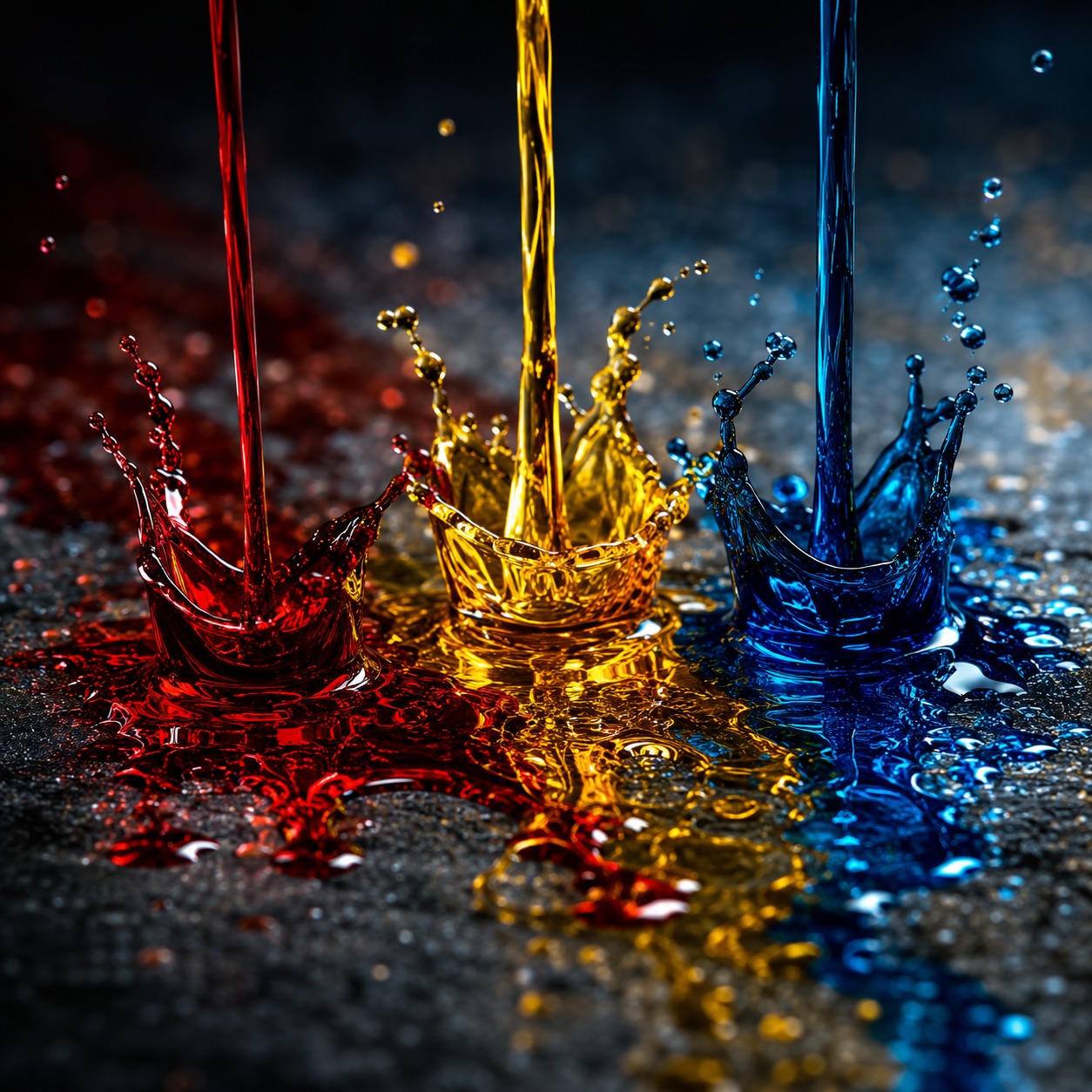
Mixed easily in petroleum and solvent-based systems.
Bright and vibrant shades with high colour intensity.
Improves product identification and differentiation.
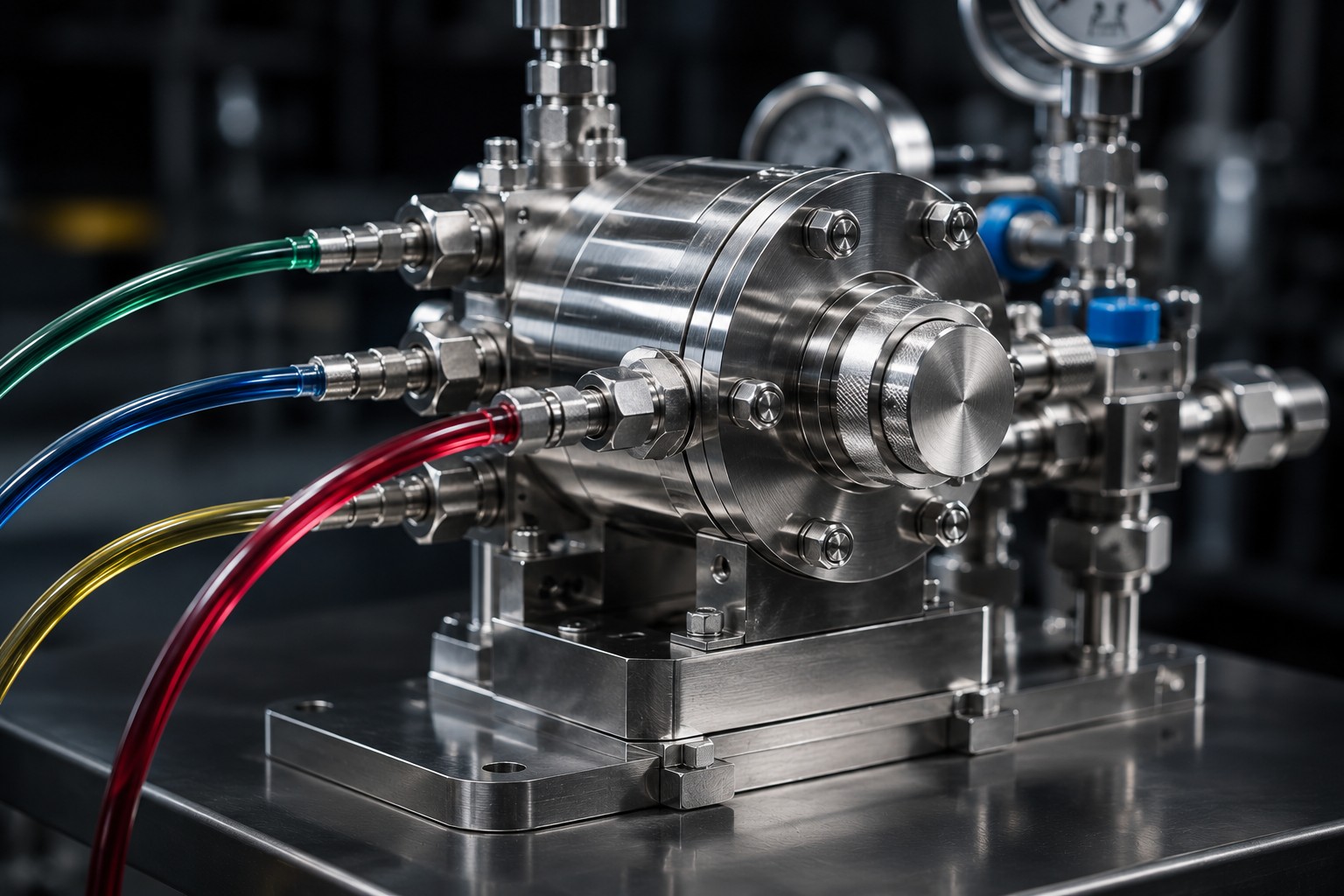
Application is done by metering pump to ensure accurate and consistent dosing.
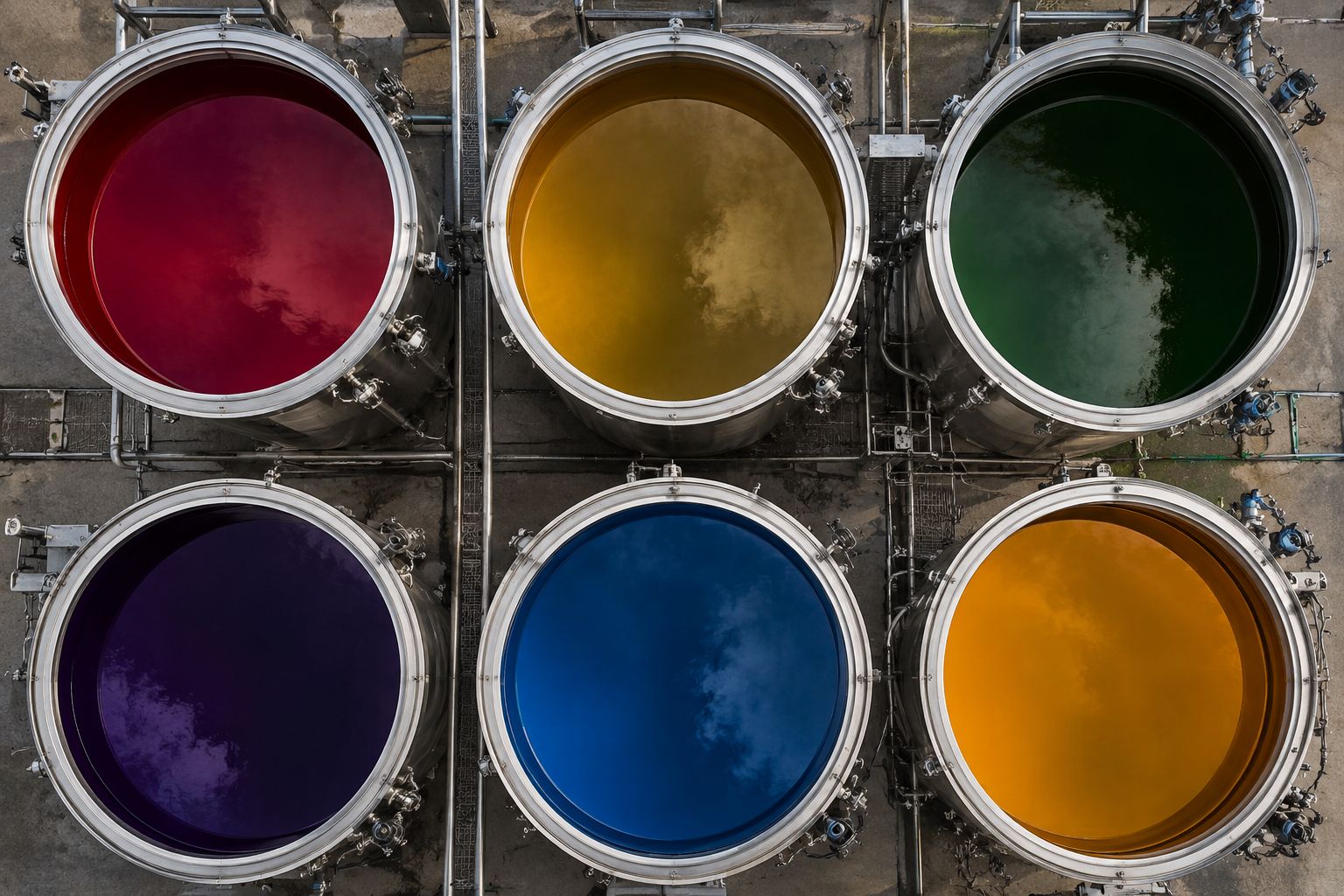
Our petroleum liquid dyes are suitable for all types of gas oil. For sensitive applications like aviation fuel, the key parameter is the insoluble content, which must be lower than 0.5%.
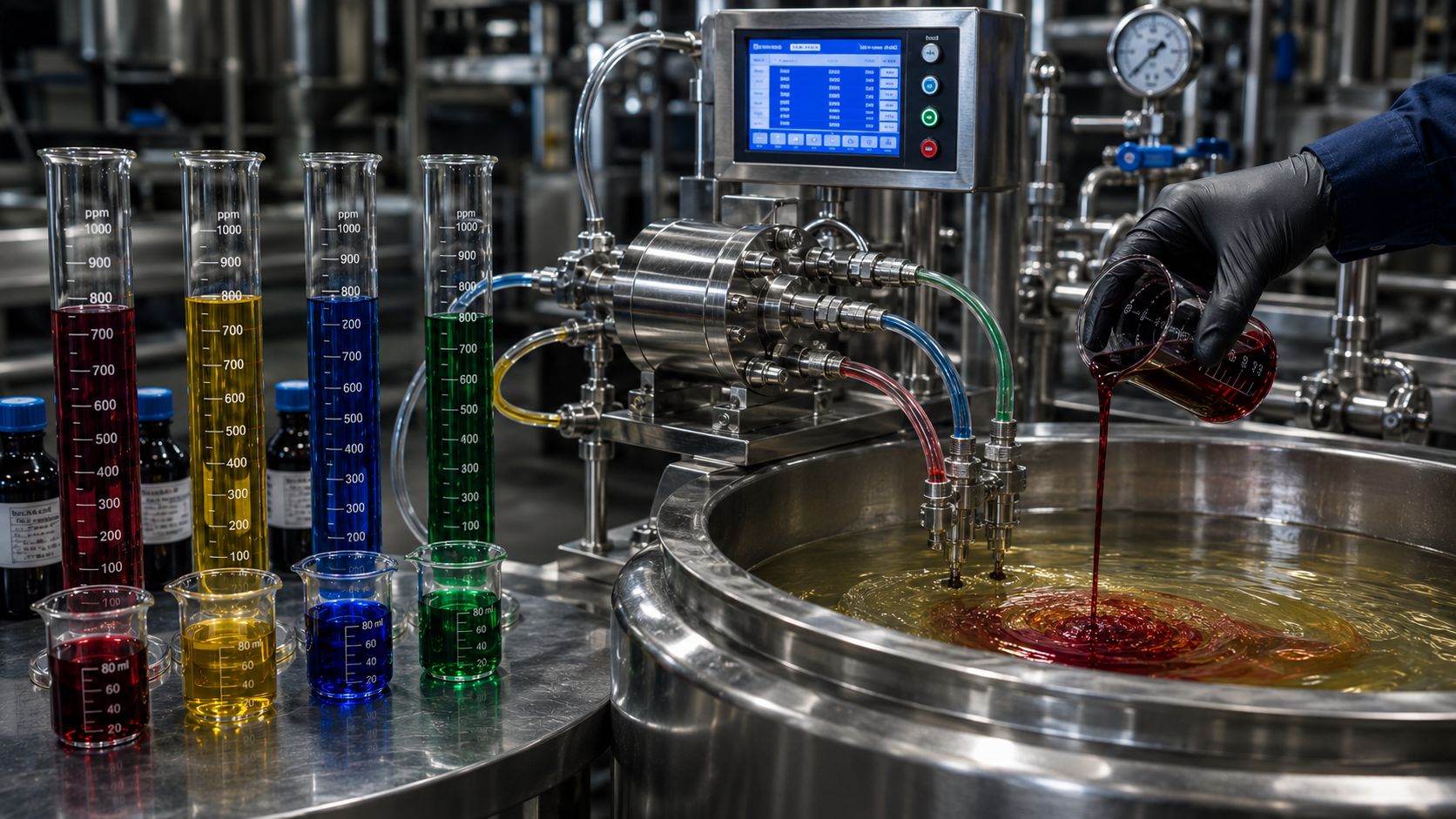
For lubricants, dosage levels are generally much higher than for gas oil. Typical dosage levels for lubricants are in the range of 150 to 200 ppm whereas for gas oil the range is between 10 ppm to 50 ppm. Please note: Actual dosages for gas oil are prescribed by the relevant government authority which also determines the specific dye or combination of dyes to be used for each fuel type.
Petroleum liquid dyes matter to fuel and lubricant producers because they dissolve fully into hydrocarbon products and give each grade a colour that regulators, distributors and refineries can identify instantly. Without that, product identification comes down to guesswork.
These are solvent-soluble colourants built for gasoline, aviation fuel, kerosene, mineral oils and lubricants. Alliance Organics manufactures this range for a category where a batch either meets spec or gets sent back.
This guide covers why solubility is non-negotiable here, how dosing changes across fuel types, which shades are available, and what to look for before choosing a supplier.
Solubility decides performance because a dye that doesn’t fully dissolve stops being a colourant and starts being a contaminant. Particles left undissolved clog filters and throw off colour readings.
A properly formulated petroleum liquid dye mixes completely into petroleum and solvent-based systems. It holds its shade through storage, transport and handling, without settling to the bottom of a tank or clouding over time.
That stability is what turns colour into a functional tool rather than just a visual marker. Pipeline operators and storage facilities depend on it for grade differentiation and for catching leaks before they escalate.
What proper solubility prevents:
Colour only works as identification when the dye stays fully and permanently dissolved.
Petroleum liquid dyes are dosed through a metering pump, which keeps quantities precise instead of relying on manual mixing. The right dose depends entirely on which product is being coloured.
Lubricants typically call for a heavier concentration, generally 150 to 200 ppm. Gas oil needs far less, usually somewhere between 10 and 50 ppm, since a small quantity spreads across a much larger fuel volume.
Aviation fuel sits in a category of its own. Insoluble content must stay under 0.5%, because even a trace of undissolved dye risks interfering with fuel system performance, an outcome aviation-grade product simply cannot allow.
Dosage guide by product type:
Product type | Typical dosage |
Lubricants | 150 to 200 ppm |
Gas oil | 10 to 50 ppm |
Aviation fuel | Insoluble content under 0.5% |
For gas oil specifically, the dye combination and dosage are usually fixed by the relevant government fuel-marking authority rather than left to supplier or buyer discretion.
Dosage is never one-size-fits-all. It shifts with the product and, for gas oil, with regulation.
Alliance Organics offers a petroleum liquid dye range built around the shades fuel and lubricant producers ask for most often, each tested before it ships.
The lineup includes Solvent Yellow 107, 124 and 126, Solvent Orange 98, Solvent Red 19E and 164, Solvent Blue 79, 79B and 98, and Solvent Green 33. Every shade is suited to gasoline, aviation fuel, kerosene or lubricant applications, checked for both solubility and colour strength beforehand.
This range lets a producer settle on one dependable shade, whether the goal is regulatory fuel marking or visual brand differentiation on a lubricant line.
A tested, wide shade range covers compliance marking and brand colour needs from a single source.
Petroleum liquid dyes matter to fuel and lubricant producers because full solubility, precise dosing and a tested shade range are what let colour function as reliable identification, not just appearance.
Key takeaways:
Looking for a petroleum liquid dye tested against your product spec? Alliance Organics can provide solubility and colour strength data for the shade you need.
They colour gasoline, aviation fuel, kerosene, mineral oils and lubricants so producers, distributors and regulators can tell grades apart. They also support leak detection in pipelines and storage systems.
Application runs through a metering pump for precise, repeatable dosing. This avoids the inconsistency that comes with manual mixing at scale.
Lubricants usually need 150 to 200 ppm, while gas oil needs considerably less, around 10 to 50 ppm. Aviation fuel follows a stricter rule, keeping insoluble content below 0.5%.
A government fuel-marking authority generally sets both the dye combination and dosage level for gas oil. Suppliers and buyers operate within that fixed specification.
Yes, as long as insoluble content stays below 0.5%, which is tighter than the requirement for most other petroleum products. That threshold is why solubility testing carries extra weight for aviation-grade dye.