


ALLIANCE ORGANICS LLP is a professionally managed company with a proven track record, with the main objective of manufacturing and exporting Woodcol Solvent Metal Complex Dyes for Wood Stain.
Our Woodcol Solvent Metal Complex Dyes also called Dyes for Wood Stains have application in colouring wood. They are also known as Wood Colourants.
Our Solvent Metal Complex dyes are mainly Azo type, easily soluble in Alcohols, Glycol Ethers, Esters, Keynotes and other organic solvents. They are practically insoluble in Water
Their main application is in Flexographic and Gravure Inks, Air Drying, Acid Curing and Amine Curing Transparent Finishes, Stoving Finishes, Polyurethane Finishes, Peroxide Curing Polyester Lacquers, Polyester Casting Resins and Wood Stains.
Solvent Yellow 21
CI No: 18690
Applications: Wood Stains • Wood Coatings & Lacquers • Furniture Finishing • Flooring & Panels • Solvent-Based Inks
Solvent Yellow 82
CI No: 187100
Applications: Furniture Finishing • Wood Lacquers & Varnishes • Wood Stains
Solvent Orange 54
CI No: 127400
Applications: Furniture Finishing • Wood Lacquers & Varnishes • Flooring & Veneers • Wood Stains
Solvent Orange 58
CI No: 127500
Applications: Wood Stains • Furniture Finishing • Wood Lacquers & Varnishes • Flooring & Veneers
Solvent Orange 62
CI No: 12714
Applications: Furniture Finishing • Wood Lacquers & Varnishes • Veneers & Panels • Wood Stains
Solvent Red 8
CI No: 12715
Applications: Furniture Finishing • Wood Lacquers & Varnishes • Veneers & Wooden Panels • Wood Stains
Solvent Red 89
CI No: Not Available
Applications: Furniture Finishing • Wood Lacquers & Varnishes • Flooring & Veneers • Wood Stains
Solvent Red 119
CI No: 187650
Applications: Wood Stains • Furniture Finishing • Wood Lacquers & Varnishes • Flooring & Veneers
Solvent Red 122
CI No: 607280
Applications: Wood Stains • Furniture Finishing • Wood Lacquers & Varnishes • Flooring & Veneers • Industrial Solvent-Based Coatings
Solvent Red 127
CI No: Not Available
Applications: Wood Stains • Furniture Finishing • Wood Lacquers & Varnishes • Flooring & Veneers • Industrial Solvent-Based Coatings
Solvent Red 132
CI No: Not Available
Applications: Wood Stains • Furniture Finishing • Wood Lacquers & Varnishes • Flooring & Veneers • Industrial Solvent-Based Coatings
Solvent Red 218
CI No: Not Available
Applications: Wood Lacquers & Varnishes • Flooring & Veneers • Industrial Solvent-Based Coatings • Wood Stains • Furniture Finishing
Solvent Blue 48
CI No: Not Available
Applications: Industrial Solvent-Based Coatings • Wood Stains • Furniture Finishing • Wood Lacquers & Varnishes • Flooring & Veneers
Solvent Blue 70
CI No: 13780A
Applications: Wood Lacquers & Varnishes • Flooring & Veneers • Industrial Solvent-Based Coatings • Wood Stains • Furniture Finishing
Solvent Black 27
CI No: 12195A
Applications: Furniture Finishing • Wood Lacquers & Varnishes • Flooring & Veneers • Industrial Solvent-Based Coatings • Wood Stains
Solvent Black 29
CI No: 127060
Applications: Leather Finishing • Printing Inks • Industrial Paints • Wood Coatings
Solvent Black 34
CI No: Not Available
Applications: Wood Coatings • Industrial Finishes • Leather Finishing • Printing Inks
Solvent Brown 43
CI No: 12830A
Applications: Wood Stains • Furniture Finishing • Wood Lacquers & Varnishes • Flooring & Veneers • Industrial Solvent-Based Coatings
| SOLVENT METAL COMPLEX DYES FOR WOOD STAIN | SOLUBILITY CHARACTER / LIGHT FASTNESS | |||||||||||
|---|---|---|---|---|---|---|---|---|---|---|---|---|
Product Name |
Shade |
MEK |
MIBK |
ACETONE |
ETHYL ACETATE |
DI ACETONE ALCOHOL |
ETHYL CELLOSOLVE |
ETHANOL |
TOLUENE |
CYCLO HEXANONE |
MIX SOLVENT |
LIGHT FASTNESS |
| Solvent Yellow 21 | 250 | 200 | 400 | 150 | 400 | 400 | 75 | 50 | 175 | 120 | 6–7 | |
| Solvent Yellow 82 | 250 | 200 | 400 | 150 | 400 | 400 | 75 | 50 | 175 | 120 | 6–7 | |
| Solvent Orange 54 | 400 | 100 | 450 | 10 | 200 | 150 | 40 | Traces | 250 | 100 | 5–6 | |
| Solvent Orange 58 | 200 | 50 | 200 | 50 | 400 | 400 | 150 | Traces | 400 | 120 | 5–6 | |
| Solvent Orange 62 | 350 | 350 | 400 | 100 | 300 | 350 | 150 | Traces | 150 | 120 | 5–6 | |
| Solvent Red 8 | 450 | 250 | 200 | 50 | 200 | 300 | 100 | Traces | 150 | 120 | 5–6 | |
| Solvent Red 89 | 150 | 50 | 400 | 20 | 400 | 350 | 20 | Traces | 200 | 150 | 3–5 | |
| Solvent Red 119 | 100 | 50 | 200 | 20 | 200 | 200 | 20 | Traces | 150 | 20 | 5–6 | |
| Solvent Red 122 | 450 | 250 | 200 | 50 | 200 | 200 | 20 | Traces | 275 | 120 | 5–6 | |
| Solvent Red 127 | 20 | 20 | 20 | 10 | 100 | 100 | 50 | Traces | 75 | 50 | 2–3 | |
| Solvent Red 132 | 300 | 100 | 400 | 50 | 400 | 200 | 100 | Traces | 150 | 100 | 6–7 | |
| Solvent Red 218 | 70 | 30 | 50 | 20 | 150 | 200 | 20 | Traces | 100 | 75 | 3–5 | |
| Solvent Blue 48 | 50 | 40 | 50 | 10 | 100 | 350 | 100 | Traces | 75 | 30 | 6 | |
| Solvent Blue 70 | 50 | 40 | 50 | 10 | 100 | 350 | 100 | Traces | 75 | 30 | 6 | |
| Solvent Brown 43 | 300 | 200 | 450 | 100 | 350 | 400 | 150 | Traces | 400 | 100 | 6 | |
| Solvent Black 27 | 300 | 200 | 450 | 100 | 350 | 400 | 150 | Traces | 400 | 100 | 6 | |
| Solvent Black 29 | 250 | 150 | 350 | 50 | 350 | 300 | 50 | Traces | 20 | 25 | 6 | |
| Solvent Black 34 | 300 | 300 | 450 | 150 | 450 | 450 | 100 | Traces | 300 | 70 | 6 | |
Solubility value represent the amount of dyestuff (in gram) which dissolves at room temperature in one litre solvent without any significant residue.
Mix Solvent: Ethanol (60%) + Toulene (30%) + Ethyl Acetate (10%)
Rating 5 represents highest fastness
Rating 1 represents lowest fastness
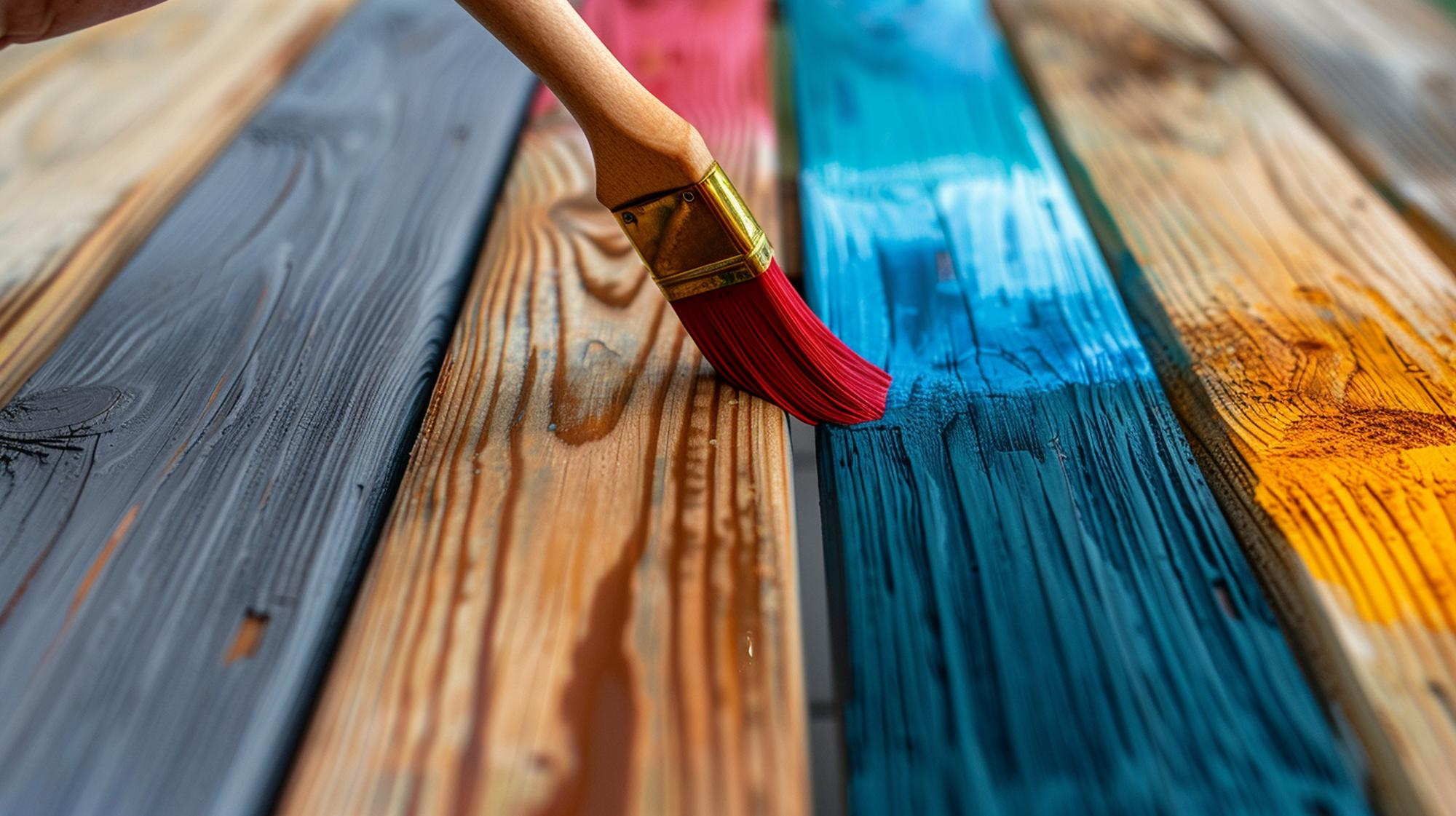
Solvent metal complex dyes deliver consistent wood stain colour when they dissolve fully in the chosen solvent and keep their shade under light exposure over time. Everything else in a finishing formulation follows from those two properties.
Alliance Organics designed its Woodcol range around exactly that pairing. Furniture, flooring and lacquer manufacturers get a colourant that behaves the same in the last litre of a batch as it did in the first.
This piece walks through the chemistry behind Woodcol dyes, what the solubility and fastness figures actually tell a formulator, and the finishing applications where these shades get used.
Woodcol dyes are largely azo-type solvent metal complex dyes, formulated to dissolve cleanly in alcohols, glycol ethers, esters and ketones, while remaining practically insoluble in water.
That insolubility isn’t a minor detail. A dye that resists dissolving in stray moisture holds its shade steady, even in finishing shops where a trace of humidity is nearly unavoidable.
The range suits a wide spread of systems: flexographic and gravure inks, air-drying and acid- or amine-curing transparent finishes, stoving finishes, polyurethane coatings, peroxide-curing polyester lacquers, polyester casting resins, and conventional wood stains.
Built for organic solvents rather than water, this chemistry is what keeps wood stain colour from shifting once applied.
The figures tell a formulator exactly how many grams of dye will dissolve per litre in a given solvent, and how well that colour will resist fading once the finish is exposed to light.
Alliance Organics tests every Woodcol shade across ten solvents, including MEK, acetone, toluene and cyclohexanone, with solubility recorded in grams per litre at room temperature.
Solvent Yellow 21, for example, dissolves up to 400 g/l in acetone and diacetone alcohol, and carries a light fastness rating of 6 to 7, close to the top of the scale. Solvent Black 34 pushes higher still, reaching 450 g/l in the same two solvents.
Performance isn’t uniform across the range, though. Solvent Red 127 dissolves more sparingly and rates just 2 to 3 for light fastness, which is worth remembering before picking a shade on colour alone.
Why this data matters in practice:
Tested solubility and fastness numbers give formulators a way to choose shades on measurable performance, not swatch appearance.
These dyes turn up mainly in furniture finishing, wood lacquers and varnishes, flooring, veneers, wood stains, and industrial solvent-based coatings.
Across the Woodcol lineup, spanning Solvent Yellow 21 and 82, Solvent Orange 54, 58 and 62, the Solvent Red series, Solvent Blue 48 and 70, and the Solvent Black and Brown shades, these applications repeat consistently.
A few shades stretch further. Solvent Black 29 and 34 also appear in leather finishing and printing inks, which shows how far this chemistry travels once it’s stabilised for solvent-based systems.
Woodcol dyes concentrate on furniture, flooring and coatings, with select shades extending into leather and ink applications.
Solvent metal complex dyes produce reliable wood stain colour when they fully dissolve in the working solvent and hold their shade under light, and every Woodcol shade is tested against both standards before it ships.
Key takeaways:
Formulating a wood finish and need shade-specific data? Get in touch with Alliance Organics for solubility and fastness figures before you commit to a batch.
They colour wood stains, lacquers, varnishes and coatings while keeping the finish transparent, so furniture, flooring and panel manufacturers get consistent colour without hiding the wood grain.
No, they’re built to stay practically insoluble in water. They dissolve instead in alcohols, esters, ketones and glycol ethers.
On a scale of 1 to 7, with 7 marking the highest fastness. Ratings differ by shade. Solvent Yellow 21 sits at 6 to 7, while certain reds rate lower.
Yes. Several shades also suit polyurethane coatings, peroxide-curing polyester lacquers, flexographic and gravure inks, and stoving finishes.
Because solubility swings notably from one solvent to another. A dye that dissolves well in acetone can behave quite differently in toluene or ethanol, so matching it to your actual solvent avoids residue and patchy colour.