

Lake colours, also called lake pigments, are a type of food colour produced by blending a dye with a substrate, such as calcium carbonate or aluminium oxide. This resulting pigment is not soluble in water and is typically used in products that have fats and oils, such as butter and chocolate. Lake colours by Alliance Organics LLP are highly stable compared to other food colours, which makes them suitable for products with a long shelf life.
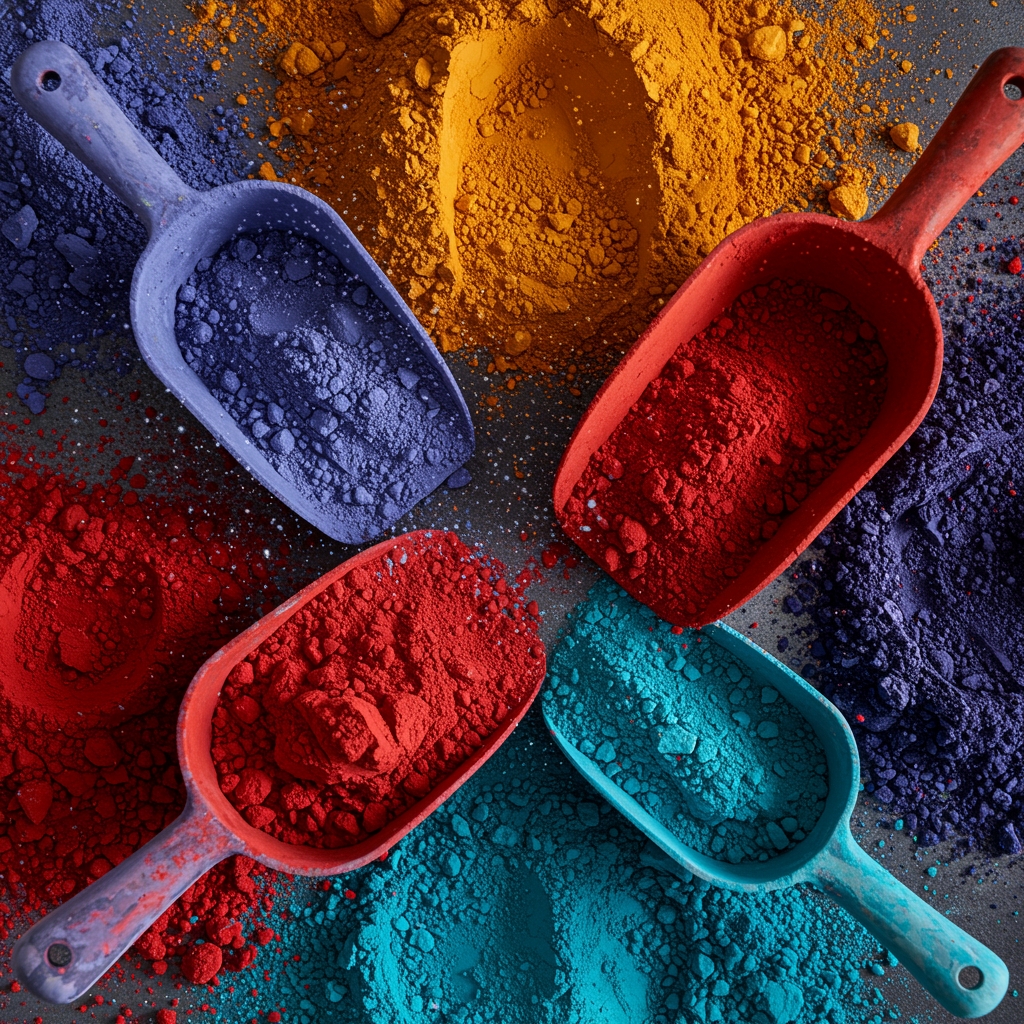
We take great pride in the exceptional dispersion properties of our Lakes, which set them apart from the competition. We achieve this by producing our Lakes in specialized mills that allow us to precisely control the particle size, resulting in a product that offers unparalleled dispersion in dry powder mixes.
The even distribution of particles within a medium, or dispersion, is critical in determining the colour value of our Lakes. When a Lake is well dispersed, its colour is evenly distributed throughout the mix, resulting in a higher colour value. This is why we put great care into optimizing our Lakes for dispersion.
Our specialized mills use cutting-edge technology to break down the particles to the desired size, resulting in a product that offers exceptional colour dispersion in dry powder mixes. Our commitment to quality and innovation has earned us a reputation as a trusted name in the industry.
Whether you need Lakes for food, pharmaceuticals, cosmetics, or personal care products, our Lakes are the ideal choice thanks to their superior dispersion properties. Choose Alliance Organics LLP for Lakes, which offers exceptional quality and performance.
Low Dye or LD
12% to 18%
Mid dye or MD
22% to 30%
High Dye or HD
32% to 40%
Lake colours are water-insoluble pigments that are derived from water-soluble dyes. They are widely used in the food industry to add colour to various products, such as baked goods, confectionery, beverages, and dairy products. Lake colours are also used in the pharmaceutical industry to colour tablets, capsules, and syrups.
In the cosmetics industry, lake colours are used to add colour to a variety of products, such as lipsticks, eye shadows, and nail polishes. They are also used in the textile industry to dye fabrics, yarns, and fibres.
One of the primary benefits of using lake colours is their excellent stability, which means that they can withstand high temperatures, light, and pH changes. This makes them ideal for use in a wide range of applications where colour stability is critical.
At Alliance Organics LLP, we offer a wide range of lake colours, including lake Allura red, lake brilliant blue, lake carmoisine, lake erythrosine, and lake quinoline yellow. All our products are made from high-quality ingredients and undergo rigorous testing to ensure they meet the highest standards of quality and safety.
Wax Coating of cheese
Bakery Products
Pharmaceutical Tablets
Cosmetic & Care Products
Snacks and Seasoning
Spices
Coating on Chocolates
Allocol™ Lake Quinoline Yellow
Lake Quinoline Yellow
| E 104
Dye Content: 12% to 18%
Applications: Cosmetics • Confectionery Coatings • Food • Pharmaceuticals
Allocol™ Lake Quinoline Yellow
Lake Quinoline Yellow
| E 104
Dye Content: 22% to 30%
Applications: Cosmetics • Food • Pharmaceuticals
Allocol™ Lake Quinoline Yellow
Lake Quinoline Yellow
| E 104
Dye Content: 32% to 40%
Applications: Cosmetics • Food • Pharmaceuticals
Allocol™ Lake Tartrazine
Lake Tartrazine
| E 102
F.D & C. No. Yellow 5 Aluminium Lake
Dye Content: 12% to 18%
Applications: Cosmetics • Confectionery Coatings • Food • Pharmaceuticals
Allocol™ Lake Tartrazine
Lake Tartrazine
| E 102
F.D & C. No. Yellow 5 Aluminium Lake
Dye Content: 22% to 30%
Applications: Cosmetics • Confectionery Coatings • Food • Pharmaceuticals
Allocol™ Lake Tartrazine
Lake Tartrazine
| E 102
F.D & C. No. Yellow 5 Aluminium Lake
Dye Content: 32% to 40%
Applications: Food • Pharmaceuticals • Cosmetics • Confectionery Coatings
Allocol™ Lake Sunset Yellow FCF
Lake Sunset Yellow FCF
| E 110
F.D & C. No. Yellow 6 Aluminium Lake
Dye Content: 12% to 18%
Applications: Pharmaceuticals • Cosmetics • Food
Allocol™ Lake Sunset Yellow FCF
Lake Sunset Yellow FCF
| E 110
F.D & C. No. Yellow 6 Aluminium Lake
Dye Content: 22% to 30%
Applications: Cosmetics • Food • Pharmaceuticals
Allocol™ Lake Sunset Yellow FCF
Lake Sunset Yellow FCF
| E 110
F.D & C. No. Yellow 6 Aluminium Lake
Dye Content: 32% to 40%
Applications: Cosmetics • Food • Pharmaceuticals
Allocol™ Lake Erythrosine
Lake Erythrosine
| E 127
F.D & C. No. Red 3 Aluminium Lake
Dye Content: 12% to 18%
Applications: Cosmetics • Food • Pharmaceuticals
Allocol™ Lake Erythrosine
Lake Erythrosine
| E 127
F.D & C. No. Red 3 Aluminium Lake
Dye Content: 22% to 30%
Applications: Cosmetics • Food • Pharmaceuticals
Allocol™ Lake Erythrosine
Lake Erythrosine
| E 127
F.D & C. No. Red 3 Aluminium Lake
Dye Content: 32% to 40%
Applications: Cosmetics • Food • Pharmaceuticals
Allocol™ Lake Ponceau 4R
Lake Ponceau 4R
| E 124
Dye Content: 12% to 18%
Applications: Cosmetics • Food • Pharmaceuticals
Allocol™ Lake Ponceau 4R
Lake Ponceau 4R
| E 124
Dye Content: 22% to 30%
Applications: Cosmetics • Food • Pharmaceuticals
Allocol™ Lake Ponceau 4R
Lake Ponceau 4R
| E 124
Dye Content: 32% to 40%
Applications: Food • Pharmaceuticals • Cosmetics
Allocol™ Lake Allura Red
Lake Allura Red
| E 129
F.D & C. No. Red 40 Aluminium Lake
Dye Content: 12% to 18%
Applications: Cosmetics • Food • Pharmaceuticals
Allocol™ Lake Allura Red
Lake Allura Red
| E 129
F.D & C. No. Red 40 Aluminium Lake
Dye Content: 22% to 30%
Applications: Cosmetics • Food • Pharmaceuticals
Allocol™ Lake Allura Red
Lake Allura Red
| E 129
F.D & C. No. Red 40 Aluminium Lake
Dye Content: 32% to 40%
Applications: Cosmetics • Food • Pharmaceuticals
Allocol™ Lake Carmoisine
Lake Carmoisine
| E 122
Dye Content: 12% to 18%
Applications: Cosmetics • Food • Pharmaceuticals
Allocol™ Lake Carmoisine
Lake Carmoisine
| E 122
Dye Content: 22% to 30%
Applications: Cosmetics • Food • Pharmaceuticals
Allocol™ Lake Carmoisine
Lake Carmoisine
| E 122
Dye Content: 32% to 40%
Applications: Food • Pharmaceuticals • Cosmetics
Allocol™ Lake Amaranth
Lake Amaranth
| E 123
Dye Content: 12% to 18%
Applications: Pharmaceuticals • Cosmetics • Food
Allocol™ Lake Amaranth
Lake Amaranth
| E 123
Dye Content: 22% to 30%
Applications: Food • Pharmaceuticals • Cosmetics
Allocol™ Lake Amaranth
Lake Amaranth
| E 123
Dye Content: 32% to 40%
Applications: Cosmetics • Food • Pharmaceuticals
Allocol™ Lake Chocolate Brown HT
Lake Chocolate Brown HT
| E 155
Dye Content: 12% to 18%
Applications: Cosmetics • Food • Pharmaceuticals
Allocol™ Lake Chocolate Brown HT
Lake Chocolate Brown HT
| E 155
Dye Content: 22% to 30%
Applications: Cosmetics • Food • Pharmaceuticals
Allocol™ Lake Chocolate Brown HT
Lake Chocolate Brown HT
| E 155
Dye Content: 32% to 40%
Applications: Cosmetics • Food • Pharmaceuticals
Allocol™ Lake Brilliant Blue FCF
Lake Brilliant Blue FCF
| E 133
F.D & C. No. Blue 1 Aluminium Lake
Dye Content: 12% to 18%
Applications: Pharmaceuticals • Cosmetics • Food
Allocol™ Lake Brilliant Blue FCF
Lake Brilliant Blue FCF
| E 133
F.D & C. No. Blue 1 Aluminium Lake
Dye Content: 22% to 30%
Applications: Food • Pharmaceuticals • Cosmetics
Allocol™ Lake Brilliant Blue FCF
Lake Brilliant Blue FCF
| E 133
F.D & C. No. Blue 1 Aluminium Lake
Dye Content: 32% to 40%
Applications: Cosmetics • Food • Pharmaceuticals
Allocol™ Lake Indigo Carmine
Lake Indigo Carmine
| E 132
F.D & C. No. Blue 2 Aluminium Lake
Dye Content: 12% to 18%
Applications: Cosmetics • Food • Pharmaceuticals
Allocol™ Lake Indigo Carmine
Lake Indigo Carmine
| E 132
F.D & C. No. Blue 2 Aluminium Lake
Dye Content: 22% to 30%
Applications: Cosmetics • Food • Pharmaceuticals
Allocol™ Lake Indigo Carmine
Lake Indigo Carmine
| E 132
F.D & C. No. Blue 2 Aluminium Lake
Dye Content: 32% to 40%
Applications: Food • Pharmaceuticals • Cosmetics
Synthetic lake colours are water-insoluble pigments made by binding a dye onto a substrate like calcium carbonate or aluminium oxide, and they’re used wherever a product with fats or oils – chocolate, butter, cosmetics – needs colour that a water-soluble dye simply can’t deliver. If a formulation would cause a regular dye to bleed or separate, a lake colour is almost always the fix.
Alliance Organics LLP manufactures these under its Allocol Lake range, built for food, pharmaceutical, and cosmetic manufacturers who need colour that holds up over a long shelf life. Because lakes are dispersed as fine particles rather than dissolved, they behave completely differently from standard dyes once they’re mixed into a fat- or oil-based product, which is exactly the gap this category exists to fill.
Here’s what this page walks through: how lake colours are made, why particle dispersion matters so much, the dye concentrations available, and where these pigments show up across food, pharma, and cosmetics.
A lake colour is a water-soluble dye that’s been chemically bonded to an insoluble substrate, turning it into a stable, particle-based pigment rather than a dissolving one. That single change in structure is what makes lakes suitable for products a standard dye would ruin.
Because lakes don’t dissolve, they stay evenly suspended in fats, oils, and dry powder mixes instead of migrating or bleeding through a product’s surface. Alliance Organics highlights this stability as a core advantage – lake colours hold up better than most other food colourants when a product needs a long shelf life without visible colour fading or separation.
In short: lakes trade solubility for stability, which is precisely the trade-off fat- and oil-based products need.
Dispersion – how evenly the pigment particles spread through a mix – directly determines colour value, and poorly dispersed lakes show up as patchy or inconsistent colour even when the dye itself is high quality. This is arguably the single biggest differentiator between a good lake colour and a mediocre one.
Alliance Organics produces its Lakes in specialised mills that control particle size precisely, which is what delivers consistent colour strength across dry powder mixes. A well-dispersed lake distributes colour evenly throughout the entire batch; a poorly milled one leaves visible streaks or dull patches, no matter how strong the underlying dye is.
In short: the milling process behind a lake colour matters just as much as the dye itself when it comes to consistent, usable colour.
Three standard concentrations – Low Dye, Mid Dye, and High Dye – give manufacturers control over exactly how much colouring power they’re adding per batch.
Concentration | Dye Content Range |
Low Dye (LD) | 12% to 18% |
Mid Dye (MD) | 22% to 30% |
High Dye (HD) | 32% to 40% |
The full Allocol Lake lineup – including Lake Tartrazine, Lake Allura Red, Lake Brilliant Blue FCF, Lake Erythrosine, Lake Quinoline Yellow, Lake Sunset Yellow FCF, Lake Ponceau 4R, Lake Carmoisine, Lake Amaranth, Lake Chocolate Brown HT, and Lake Indigo Carmine – is available across all three concentration bands, so formulators can dial in colour intensity without switching shades.
They’re used anywhere colour stability under heat, light, or pH change matters more than solubility – bakery products, confectionery coatings, pharmaceutical tablets, and cosmetics like lipsticks and eye shadows are the most common applications.
Typical uses include:
Lake colours are also used in textiles for dyeing fabrics, yarns, and fibres, which shows just how far this category extends beyond food alone. The common thread across every one of these applications is the same: a need for colour that won’t bleed, fade, or shift under processing conditions.
Synthetic lake colours solve a problem water-soluble dyes can’t: delivering stable, even colour in fat-based, oil-based, or long-shelf-life products where a dissolving dye would simply fail.
Key takeaways:
For technical data sheets or dye-concentration guidance, reach out to Alliance Organics directly.
Lake colours are water-insoluble pigments dispersed as particles, ideal for fat- and oil-based products like chocolate, while water-soluble food colours dissolve fully and are better suited for beverages and other liquid formulations.
Yes, lake colours are widely used in cosmetics such as lipsticks, eye shadows, and nail polishes, and manufacturers like Alliance Organics produce them under regulated dye content standards to ensure consistent quality and compliance.
Because chocolate and other fat-based products don’t have water content for a dye to dissolve into, lake colours – which disperse as stable particles rather than dissolving – provide even, long-lasting colour that a standard dye can’t achieve.
Dye content indicates how much active colourant is present in the pigment blend, ranging from 12–18% in Low Dye grades up to 32–40% in High Dye grades, letting formulators control colour intensity precisely.
Lake colours are notably more stable, withstanding high temperatures, light exposure, and pH changes better than many alternatives, which is why they’re the preferred choice for products requiring a long shelf life.
Yes, lake colours are commonly used to colour tablets, capsules, and syrups, valued in pharmaceutical manufacturing for both their visual consistency and their stability across a product’s shelf life.
Beyond food, lake colours are used in pharmaceuticals, cosmetics and personal care, and even textiles for dyeing fabrics, yarns, and fibres, reflecting how broadly this pigment category applies outside beverages and confectionery.