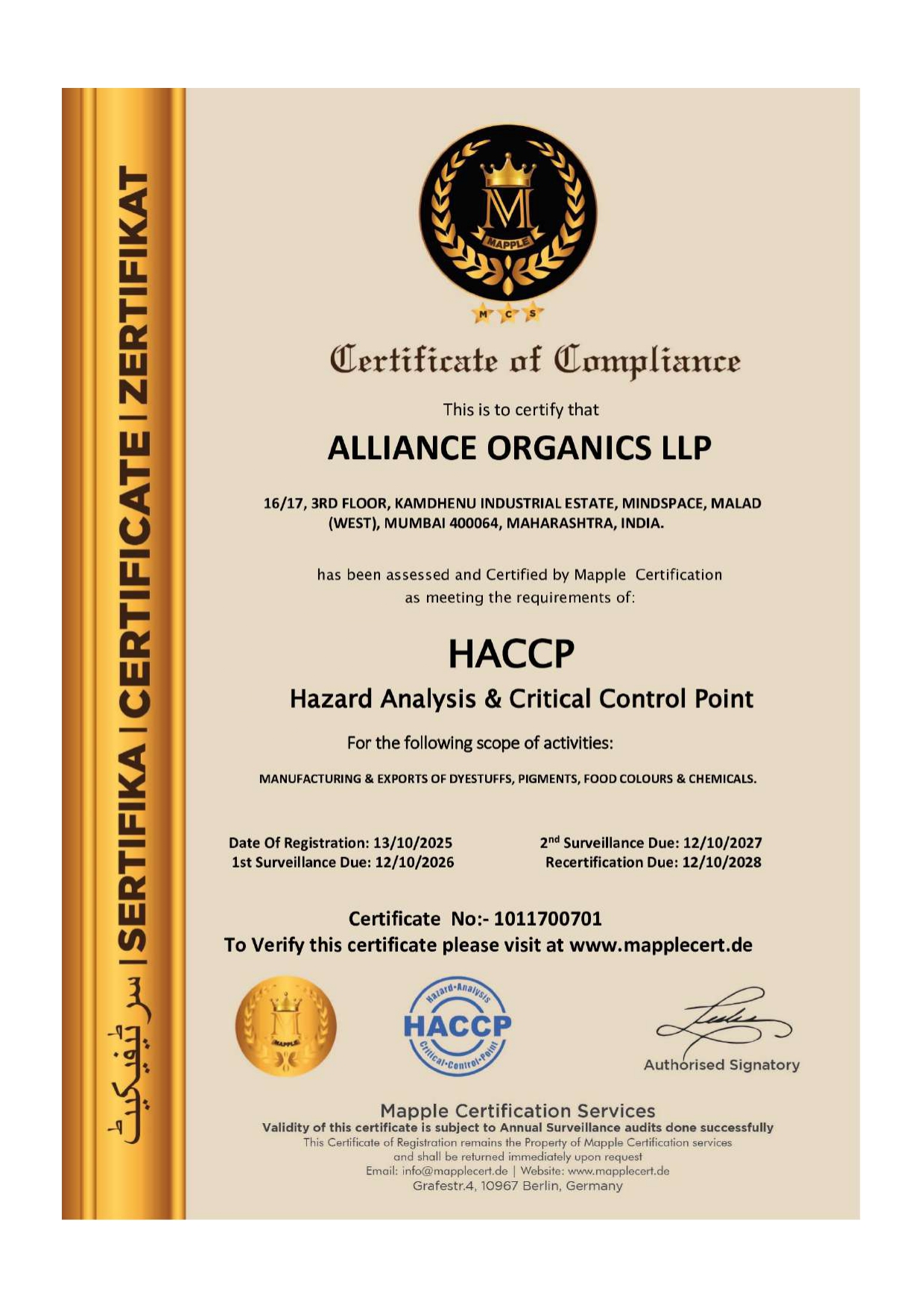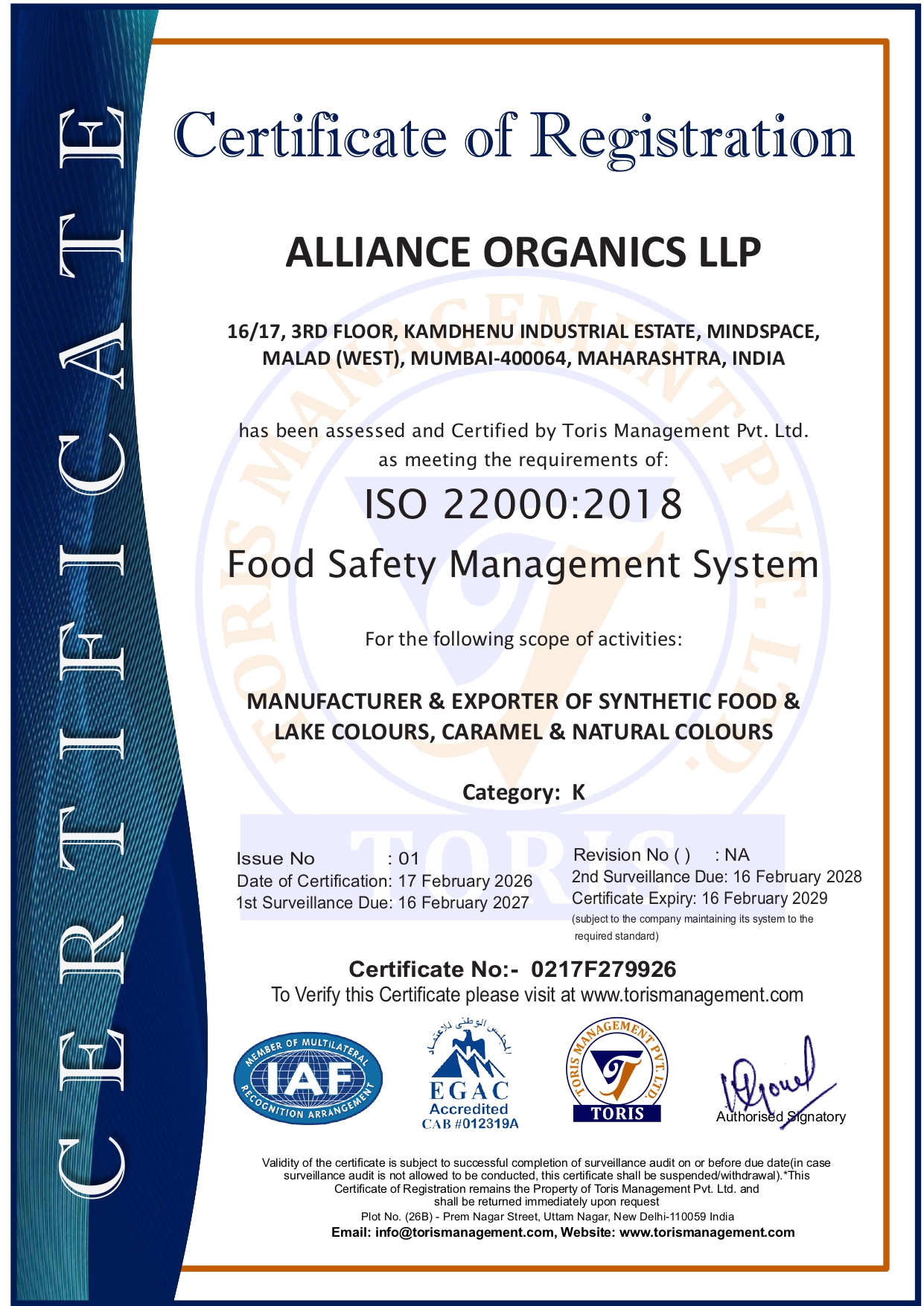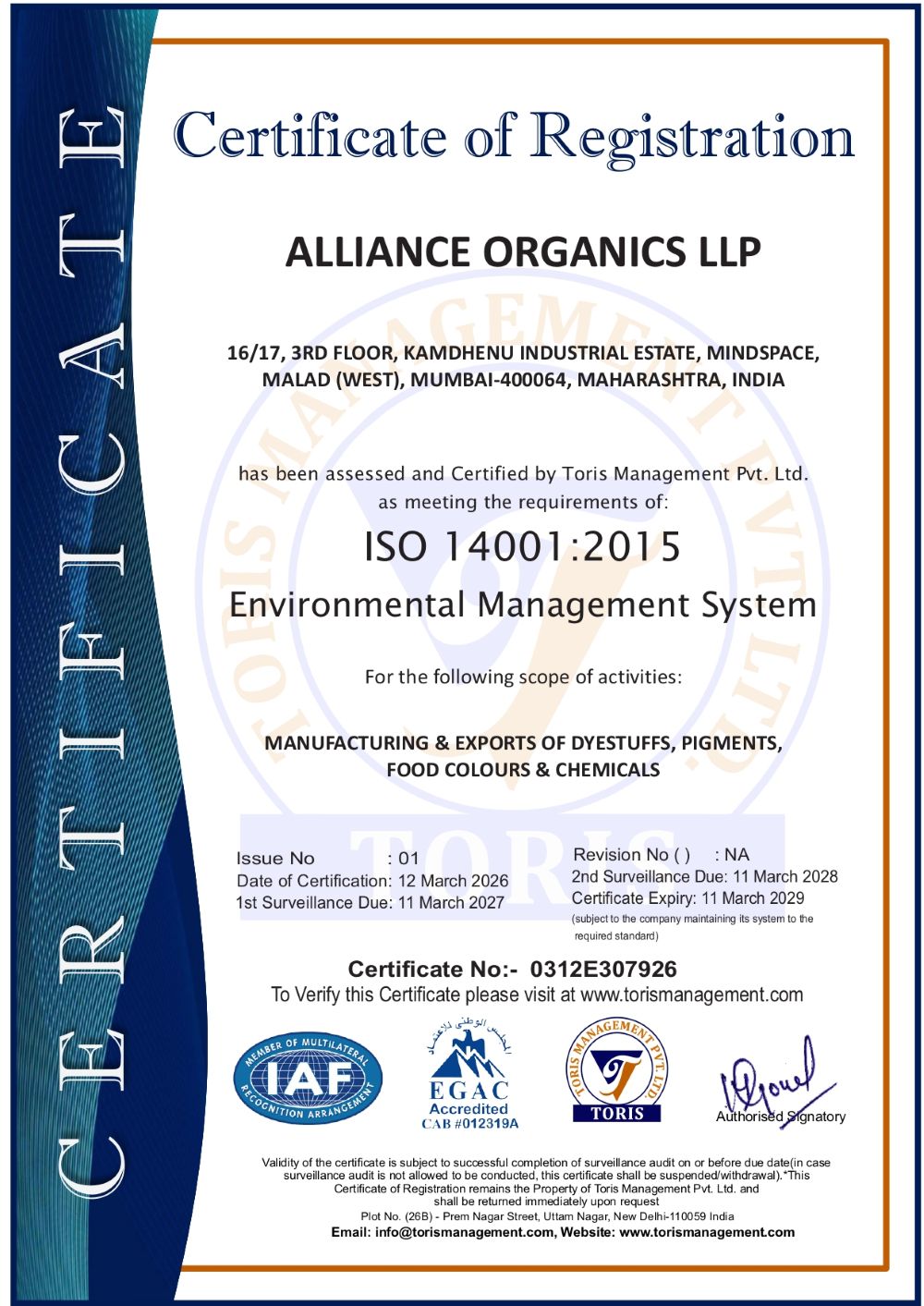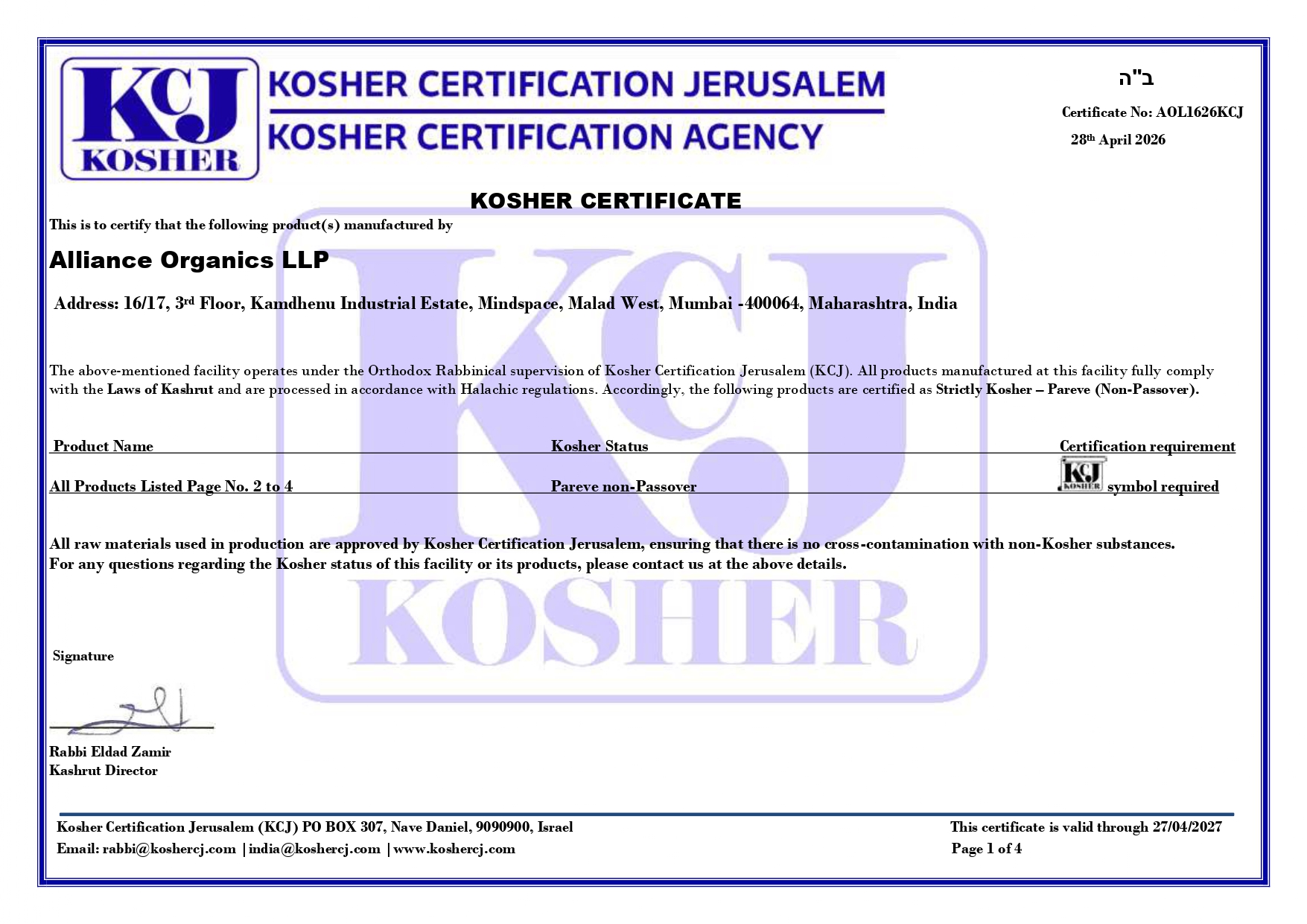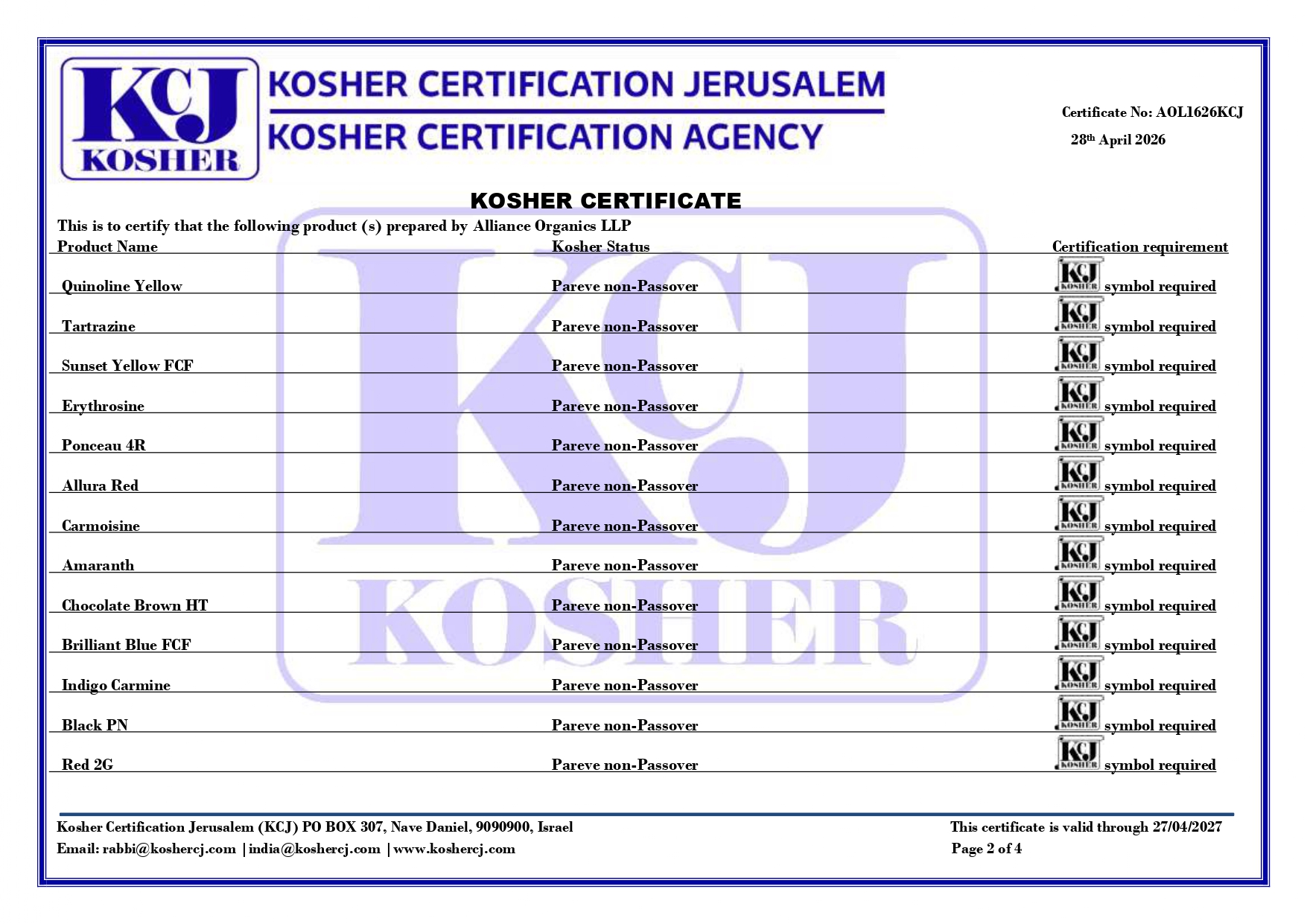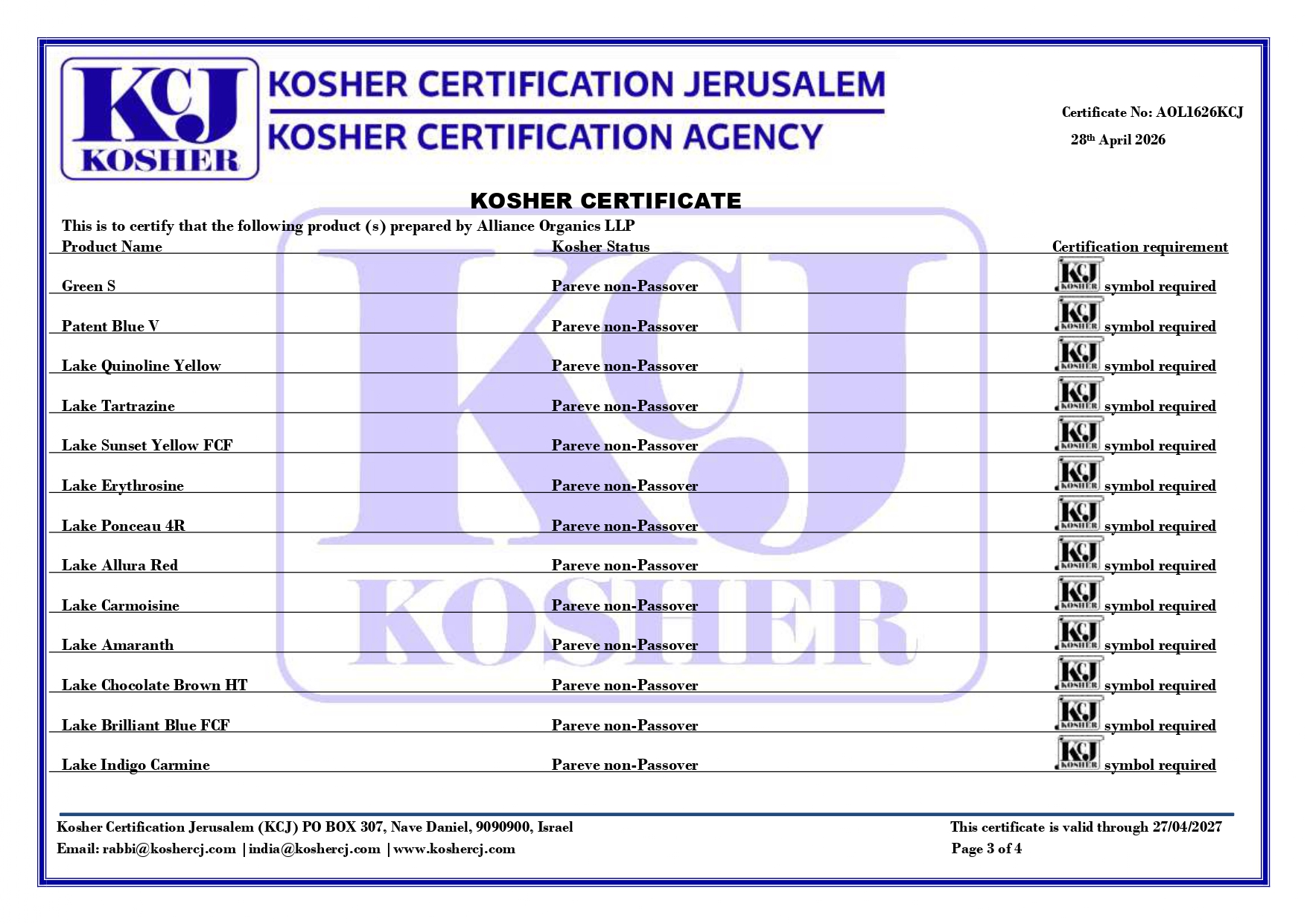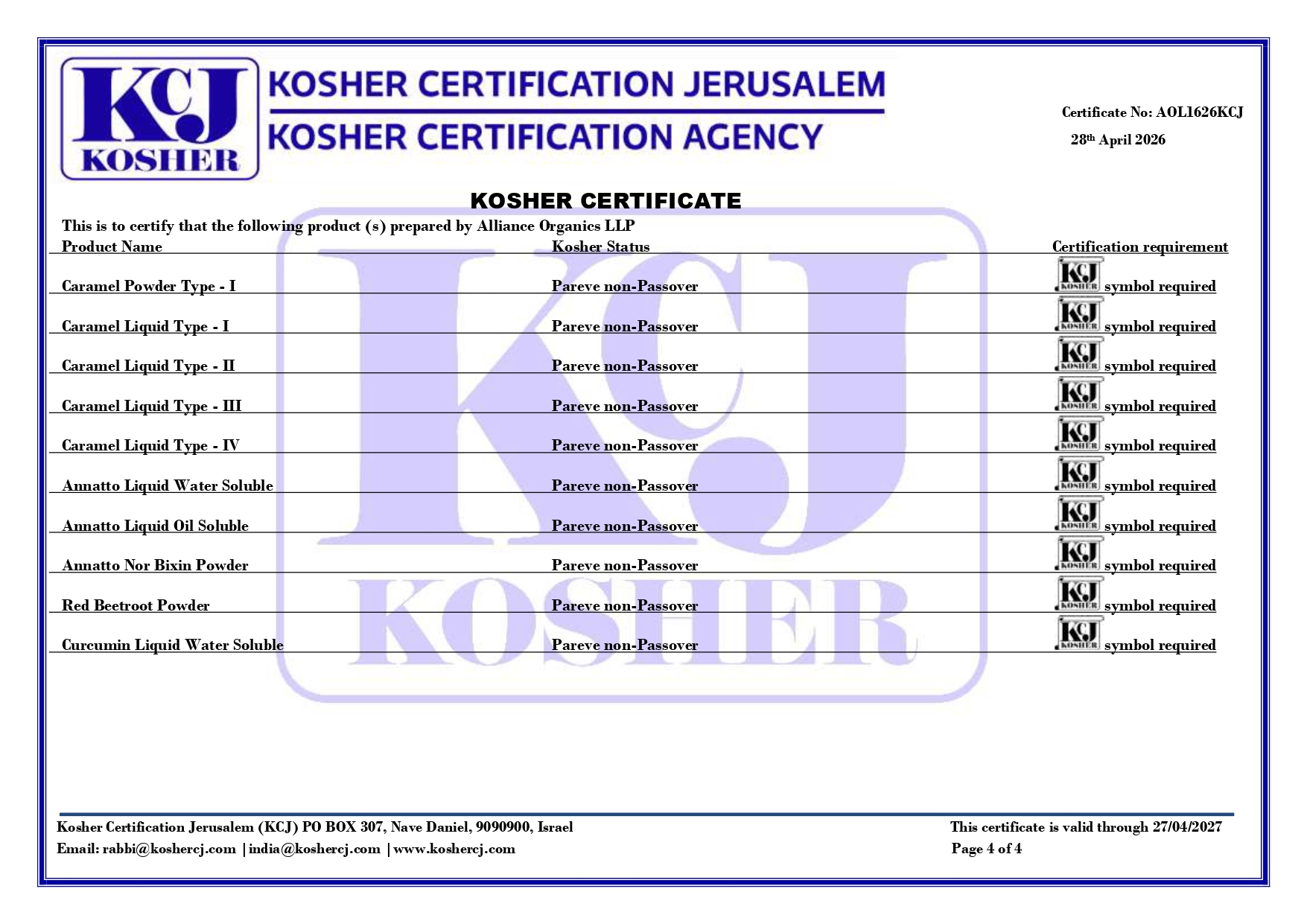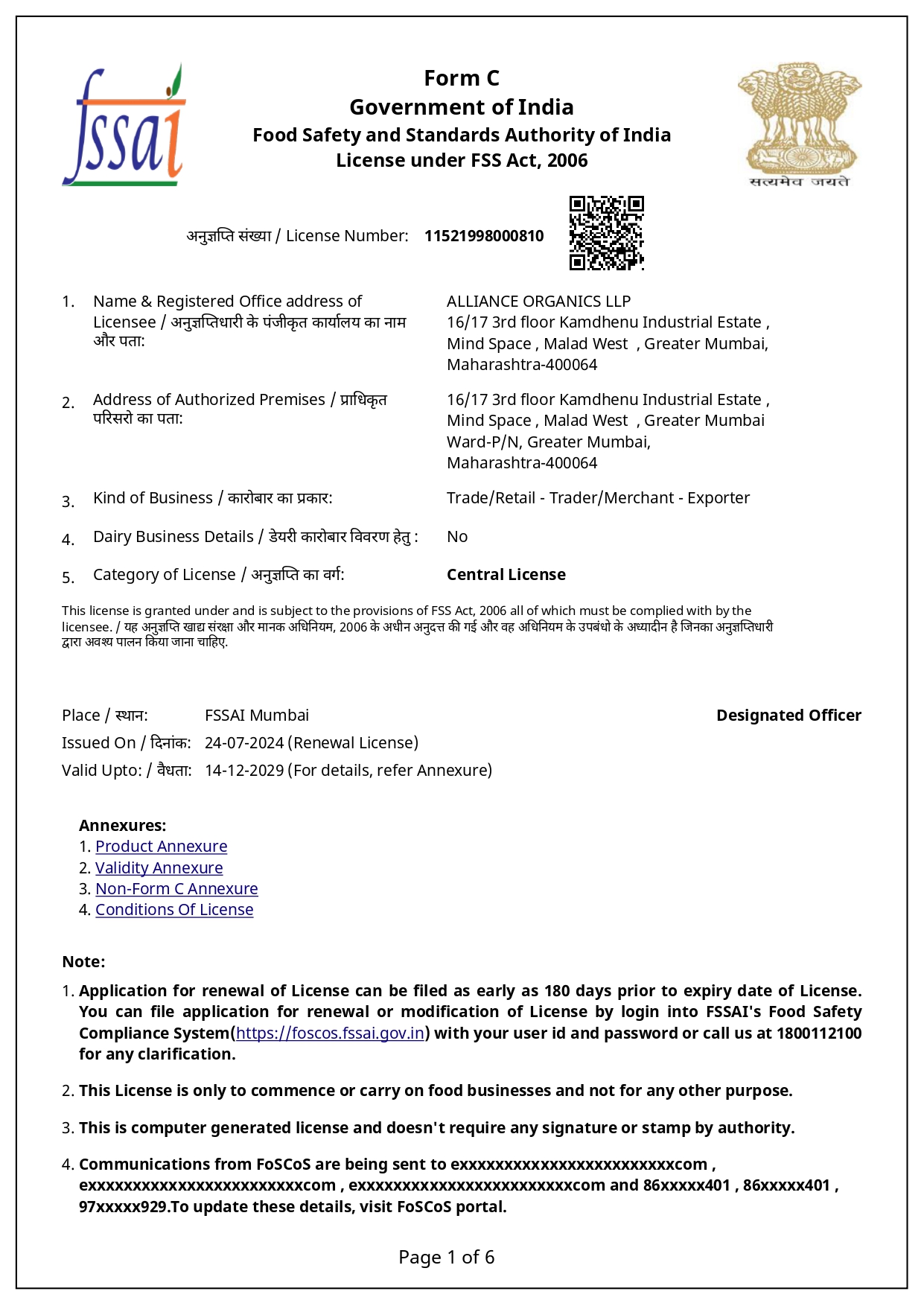


Alliance Organics LLP is a leading manufacturing company for food colors in India. Known for being a renowned producer in the synthetic food coloring segment, our main objective is producing and exporting globally, various types of Food Colors. We customize water soluble blend of colors, in accordance with the customer’s requirement.
Food Colors manufactured and distributed by Alliance Organics LLP, are incorporated for the preparation of eatables like ice creams, dairy products, confectionery, beverages, pet food, and cosmetics (Lipstick, Powder, Talcs, Lotions, Creams). We extend our offerings, to the oral medicinal sector for the production of capsules, tablets, syrups and liquids, to give them a pleasant look and appearance. Being an international exporter and supplier, USA, China, Indonesia, Russia and Brazil are our major supporters.
These are a water soluble variety, that’s available in powder form. Also termed as artificial food colors, our synthetic food variants are processed & manufactured chemically. Our food colors have high utilitarian value & are mostly used as dyes for food, pharmaceuticals, cosmetics & other industries. We maintain strict international standards and adhere to all the checks.
Food colours have become an essential component of the food industry because the appearance and presentation of food are critical factors in its consumption. In the present world, people tend to eat with their eyes first, and the visual appeal of food influences their decision to consume it.
Food manufacturers add food colours to enhance the appearance of food and beverages and make them more visually appealing. The colours used in food and drinks include red, yellow, green, blue, purple, and other shades. Food colours by Alliance Organics LLP are used in various food products, such as candies, baked goods, beverages, and processed foods.

Food colours can be made from either natural or synthetic ingredients. Natural food colours are derived from fruits, plants, and vegetables. Synthetic colours, on the other hand, are made from chemicals. The commonly used synthetic food colours produced by Alliance Organics LLP are Red 40, Yellow 5, and Blue 1. Natural food colours are obtained from sources like beet juice, turmeric, and spirulina.
Feed Industry
Colourants in Pet Food
Writing inks for Special Applications
Paper Industry
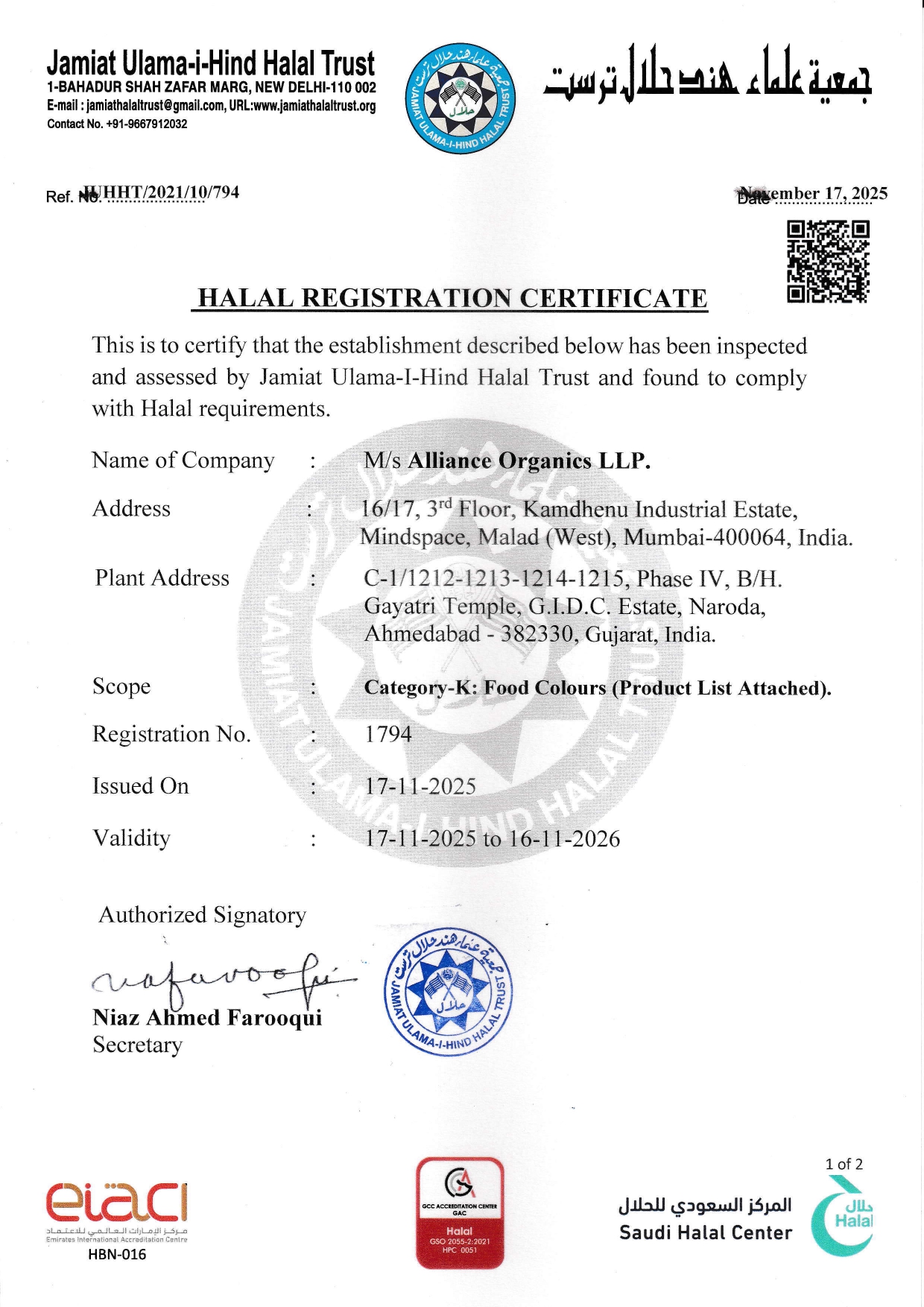
Various organizations, including the Food and Drug Administration (FDA), regulate food colours. The FDA has implemented rigorous guidelines for manufacturers to follow to guarantee the safety of their products. Moreover, several countries have regulations which manufacturers must comply with to sell their products in those countries like US FDA and JEFCA Standards.
Allocol™ Quinoline Yellow
Quinoline Yellow
| E 104
CI No: 47005
Dye Content: Min. 70%
Applications: Cosmetics • Food & Beverages • Seed Coating • Industrial Coloring
Allocol™ Tartrazine
Tartrazine
| E 102
| F.D & C. No. Yellow 5
CI No: 19140
Dye Content: Min. 87%
Applications: Cosmetics • Food • Pharmaceuticals • Beverages
Allocol™ Sunset Yellow FCF
Sunset Yellow FCF
| E 110
| F.D & C. No. Yellow 6
CI No: 15985
Dye Content: Min. 87%
Applications: Cosmetics • Food • Pharmaceuticals • Beverages
Allocol™ Erythrosine
Erythrosine
| E 127
| F.D & C. No. Red 3
CI No: 45430
Dye Content: Min. 87%
Applications: Cosmetics • Food • Pharmaceuticals • Beverages
Allocol™ Ponceau 4R
Ponceau 4R
| E 124
CI No: 16255
Dye Content: Min. 82%
Applications: Cosmetics • Food • Beverages
Allocol™ Allura Red
Allura Red
| E 129
| F.D & C. No. Red 40
CI No: 16035
Dye Content: Min. 87%
Applications: Beverages • Cosmetics • Food • Pharmaceuticals
Allocol™ Red 2G
Red 2G
| E 128
CI No: 18050
Dye Content: Min. 80%
Applications: Food • Beverages
Allocol™ Carmoisine
Carmoisine
| E 122
CI No: 14720
Dye Content: Min. 87%
Applications: Food • Beverages • Cosmetics
Allocol™ Amaranth
Amaranth
| E 123
CI No: 16185
Dye Content: Min. 87%
Applications: Cosmetics • Food • Pharmaceuticals • Beverages
Allocol™ Chocolate Brown HT
Chocolate Brown HT
| E 155
CI No: 20285
Dye Content: Min. 70%
Applications: Food • Pharmaceuticals • Beverages
Allocol™ Brilliant Blue FCF
Brilliant Blue FCF
| E 133
| F.D & C. No. Blue 1
CI No: 42090
Dye Content: Min. 87%
Applications: Cosmetics • Food • Pharmaceuticals • Beverages
Allocol™ Patent Blue V
Patent Blue V
| E 131
CI No: 42051
Dye Content: Min. 85%
Applications: Pharmaceuticals • Beverages • Medical Diagnostics • Food
Allocol™ Indigo Carmine
Indigo Carmine
| E 132
| F.D & C. No. Blue 2
CI No: 73015
Dye Content: Min. 85%
Applications: Food • Pharmaceuticals • Beverages • Medical Diagnostics
Allocol™ Black PN
Black PN
| E 151
CI No: 28440
Dye Content: Min. 80%
Applications: Beverages • Cosmetics • Food
Allocol™ Green S
Green S
| E 142
CI No: 44090
Dye Content: Min. 80%
Applications: Cosmetics • Food • Beverages
Food colour comes from two sources: natural extracts and synthetic compounds. Manufacturers pick between them based on the product’s needs, not personal preference.
Natural food colour is drawn directly from plants and produce. Beet juice produces red, turmeric produces yellow, and spirulina produces the blue-green tone common in clean-label formulations. This method predates modern food processing by centuries.
Synthetic food colour is manufactured chemically for exact repeatability. Red 40, Yellow 5 and Blue 1 are recognisable names that appear on ingredient lists without most consumers giving them a second thought. Brands choose synthetic colourants when every production run has to match the last one precisely.
Factors that decide the choice:
Neither natural nor synthetic is the default right answer. The product decides.
Food colour is used across several industries that value the same stability and solubility that make it safe for consumption.
Industries outside food borrow food colour because it’s stable, soluble and already tightly regulated.
Food colour is regulated tightly because it enters products people consume daily, often without a second thought. No colourant reaches shelves without clearing approval first.
In the United States, the FDA sets the requirements a colourant must meet before sale. Other countries maintain their own regulatory systems, and JECFA standards are widely used as a common international benchmark. A brand selling globally typically has to satisfy more than one regulatory framework at once.
This level of scrutiny exists because consumption is frequent and often involves children, so purity thresholds and usage limits are reviewed on an ongoing basis. Regulatory clearance in every target market is a requirement, not a formality.
Food colour shapes how appetizing a product appears before taste ever comes into play, which is why serious manufacturers treat it as essential rather than optional.
Key takeaways:
Need a food colour supplier that matches your target market’s regulations and batch consistency needs? Alliance Organics can help you find the right fit for your product line.
It makes food, beverages and certain medicines visually appealing without altering taste. The appeal happens before the first bite or sip.
Yes, provided it stays within limits set by regulators such as the FDA and JECFA. Safety depends on approved dosage and purity, not on choosing synthetic over natural.
Natural food colour comes from plant or fruit extracts, while synthetic is chemically manufactured. Synthetic holds up better under processing and heat, while natural is favoured for clean-label positioning.
Yes. It’s used in animal feed, pet food, select ink formulations and certain paper production processes.
Food and beverage manufacturing leads, but pharmaceuticals, confectionery, dairy and cosmetics all use it regularly too.