How Reactive Dyes Increase Colour Fastness in Textile Manufacturing
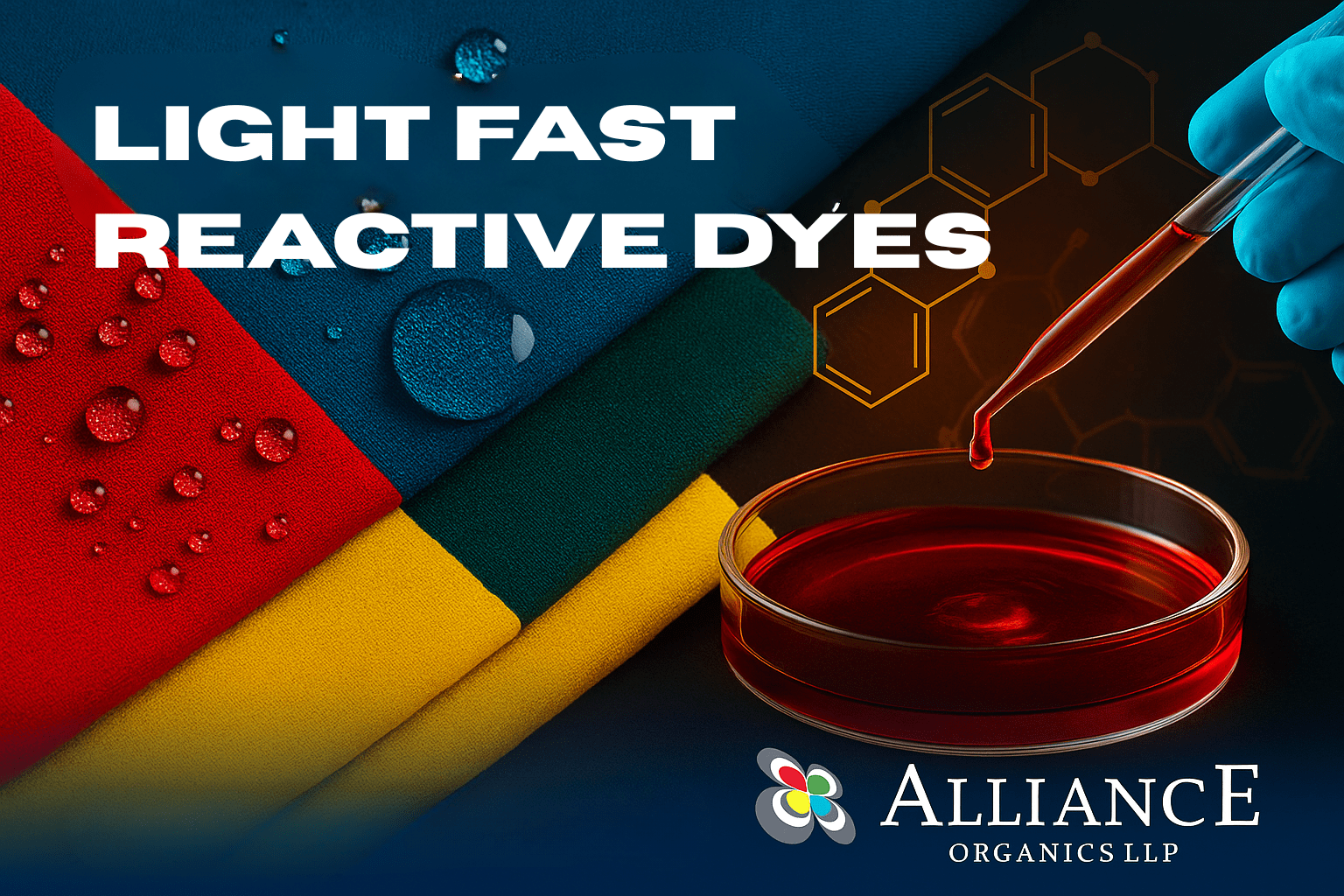
Colour fastness is an attribute that cannot be discounted in the fast moving textile industry  today; it is a requirement. Businesses need dyes to be colour intense wash after wash, and  customers want garments to be bright over the life of the garment. You understand the  dilemmas in matching manufacturing efficiency, performance, and sustainability as a textile  professional. 

This is where Reactive Dyes excel. They possess improved colour fastness, particularly on  cotton and cellulosic fibres. Let us consider why reactive dyes are superior to others when  colour retention is of utmost significance, and how you can reap its benefits from your  production line. 

Colour Fastness Problems: 

Colour fastness is a property of fabric, which enables it to hold its colour when it is exposed  to various conditions such as: 

  • Washing 
  • Light exposure 
  • Abrasion or rubbing 
  • Sweat 

Problems most commonly faced by manufacturers are: 

  • Fading after repeated washing 
  • Irregular coloration due to dye migration 
  • Light exposure-induced fading in display
  • Inadequate dye selection, leading to customer complaints 

Why Reactive Dyes Succeed with Fastness 

Reactive dyes establish colvalent links with the molecules of fibres, and colour becomes  fixed into fabric permanently. This grants reactive dyes their fastness strengths. 

Key advantages are: 

  • Excellent washing fastness 
  • Fine light fastness 
  • Rich and vivid colours 
  • Good affinity with cotton, viscose, and linen 

Application in Cotton and Cellulosic Fibres 

The preferred choice for dyeing cotton products like: 

  • Apparel 
  • Household textiles (e.g., bedsheets, curtains, towels) 
  • Fashion textiles 

Since consumers increasingly demand comfort and sustainability, reactive dyes give  assurance of product life and customer satisfaction. 

Optimum Practices while Using Reactive Dyes 

To avail maximum benefits, keep in mind: 

  • Under controlled conditions of dyeing 
  • Proper wash-off to avoid bleeding 
  • Efficient use of water and energy with innovative low-salt, low-temperature dyes
  • Coordination with suppliers offering consistent quality and technical support 

Why Alliance Organics should be your first choice for Reactive Dyes? 

At Alliance Organics LLP we provide: 

– Reactive dyes in various colors specifically formulated to be used on fabrics – Technical support to improve your colour fastness 

  • Shade cards and TDS for quality evaluation 
  • Reliable supply chains for repeat manufacturing 

Order a Sample Pack to Test Our Reactive Dyes 

Ready to improve your colourfastness and brightness of your fabric? 

Reach out to receive a sample pack and test our reactive dyes and see the difference they  can make in your business. 

Frequently Asked Questions on Reactive Dyes and Colour Fastness 

1. What are reactive dyes most suitable for? 

Reactive dyes are most effectively used in dyeing cellulosic fibres like cotton and viscose  due to their superior covalent fixation and thus resulting in excellent fastness. 

2. Why do reactive dyes increase colour fastness? 

They form irreversible chemical bonds with fibres, which means the dye will not be washed  out or easily fade away. 

3. Can reactive dyes be used for colouring synthetic fibres? 

Reactive dyes are best used with natural fibers like cotton. Disperse dyes or acid dyes are  used on synthetics. 

4. Are reactive dyes friendly to the environment? 

Today, reactive dyes can be environmentally friendly when applied with efficient dyeing processes that use minimal water and energy. 

5. How do I test for compatibility of reactive dye with my substrate?

Call us to discuss technical support and ask for a TDS or sample pack to test in your own plant.

The Ultimate Guide to Paper Dyes: Unlocking the Science of Vibrant Paper Colouring
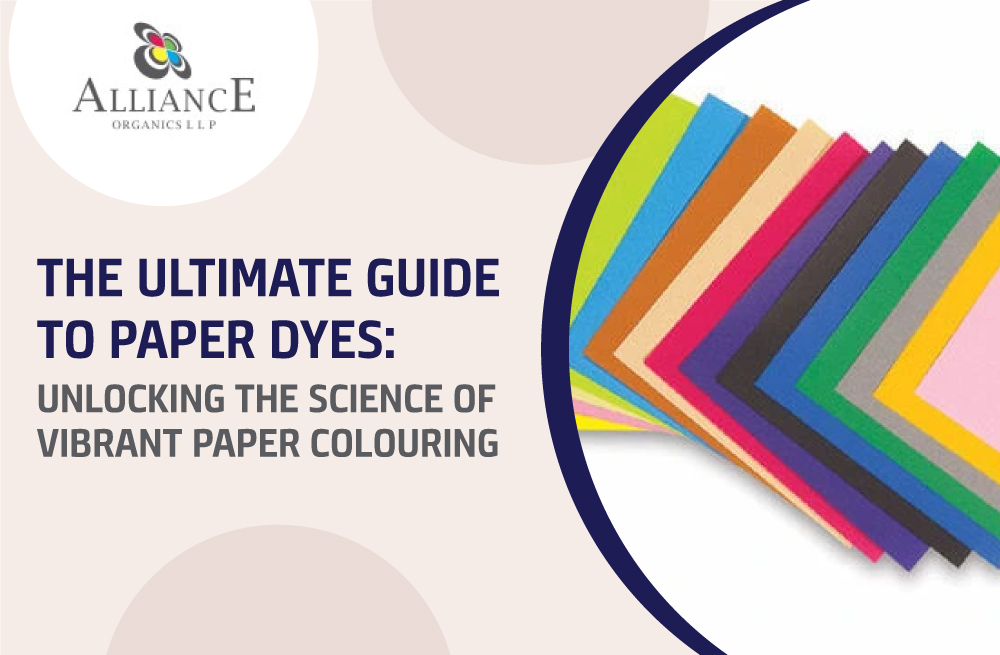
Do you ever ask yourself how papers achieve their astonishing colours?

From books and packaging to art supplies and gift wraps, coloured paper is part and parcel of our lives. But what makes paper so vibrantly coloured? The secret lies in paper dyes—specialised colourants that enhance aesthetics, functionality, and durability to paper. These dyes deliver high-intensity hues, which are formulated to meet a range of industrial needs.

This guide covers everything you need to know about paper dyes, including their types and applications, to industry-leading solutions by Alliance Organics LLP.

What Are Paper Dyes?

Paper dyes are water-soluble dyes especially developed for the colouring of paper. Dyes differ from pigments as the latter remain on the surface, but dyes pass into paper fibres, giving a more even and durable colouration. They find application in a variety of paper production processes, ensuring excellent fastness to light, reproduction, and stability.

Major Paper Dye Characteristics:

  • Stable and perfect solubility
  • High tint strength and intensity of shade
  • High light-fastness and resistance to washes
  • Compatibility with different grades of paper and coatings
  • Environment-friendly options available

Science Behind Paper Dyes

The effectiveness of paper dyes is based on a number of scientific factors:

  • Interaction with Fibres: The dye should be able to penetrate cellulose fibres well for uniform colouration.
  • pH: Dyes respond well at particular pH levels.
  • Thermosensitivity: Temperature may affect the absorption rate and ultimate colour strength of the dye.
  • Affinity & Fixation: Some dyes have an affinity towards specific paper fibre types.
  • Fastness Properties: Light, water, and chemical resistance all play a part in durability.

Understanding these basics will allow the manufacturer to select the right dye for his or her paper products.

Types of Paper Dyes and Their Applications

Depending upon the type of application and the required performance, various types of paper dyes are used. Let’s find out about the main categories:

1. Basic Dyes

  • Used in coloured packaging, decorative paper, and posters.
  • This is ideal for applications that demand bright colours.

2. Direct Dyes

  • Water-soluble and easy to apply
  • Excellent for writing and printing papers
  • Good lightfastness and economical colouring

3. Acid Dyes

  • Speciality papers like tissue, wrapping, and filter paper
  • Deep, rich hues with excellent penetration

4. Sulphur Dyes

  • Low-cost alternative with moderate colour fastness
  • Typically used in kraft and industrial-grade paper productions

5. Reactive Dyes

  • Chemical bonding with cellulose fibres gives excellent permanence.
  • Best suited for premium, fade-resistant paper applications

6. Fluorescent Dyes

  • Glow-in-the-dark or high-visibility effects
  • For security papers, posters, and neon-coloured materials

7. Metal Complex Dyes

  • Extremely stable with outstanding resistance to external factors
  • Often used in speciality papers that demand durability

The Role of Paper Dyes in Various Industries

Paper dyes are in great demand in a variety of industries, making paper products more aesthetic and qualitative.

  • Printing & Packaging: Vibrationally bright colours for magazines, newspapers, and branded packaging materials.
  • Office & Stationery Supplies: Coloured paper for notebooks, folders, and envelopes.
  • Gift Wrapping & Art Paper: Visually beautiful, decorative sheets for creative applications.
  • Tissue Paper & Napkins: Food-safe, non-toxic dyes for hygiene products.
  • Security & Currency Paper: Specially formulated dyes to enhance security features and prevent counterfeiting.
  • Handmade & Speciality Papers: Unique, custom hues for artisanal and speciality paper production.
  • Food Packaging & Labels: Safe and compliant dyes for packaging that comes into contact with food.

Why Alliance Organics LLP is Your Trustee for Paper Dyes

Alliance Organics LLP is the best paper dyes manufacturers in India, setting benchmarks in terms of quality, performance, and innovation. Here are some reasons why we are a favourite around the world:

  • ISO 9001:2015 Certified: Strict quality control measures for superior performance. High-Performance
  • Dye Solutions: Consistently rich, long-lasting colours tailored for diverse applications.
  • Customised Formulations: Speciality dye solutions designed for specific paper industry needs.
  • Advanced Manufacturing Facilities: Cutting-edge technology ensures efficiency and reliability.
  • Global Reach: Trusted supplier in the USA, Europe, Southeast Asia, and beyond.

Quality Control & Assurance at Alliance Organics LLP

We maintain stability, durability, and performance through stringent quality checks on our paper dyes. Our QC process includes:

  • Colour Strength & Consistency: Uniform and reliable colour quality.
  • pH & Viscosity Testing: Optimising dye formulations for different grades of paper.
  • Surface Tension & Conductivity: Improving absorption and application efficiency.
  • Light & Wash Fastness: Maximising dye stability against environmental factors.

By adhering to the highest standards, we deliver paper dyes that meet industry regulations and customer expectations worldwide.

Eco-Friendly & Sustainable Paper Dyes

Sustainability is a key focus at Alliance Organics LLP. Our eco-friendly paper dyes are:

  • Biodegradable & Non-Toxic: Ensuring minimal environmental impact.
  • Compliant with Environmental Standards: Meeting global safety regulations.
  • Halal & Kosher Certified: Suitable for sensitive applications.
  • Heavy Metal-Free Options: Reducing environmental contamination.
  • Water-Saving Formulations: Enhancing dye efficiency to reduce waste.

By opting for our paper dyes, you contribute to a greener, more sustainable future.

Conclusion: Take Your Paper Products to New Heights with Super Premium Paper Dyes

You will get only the right kind of paper dyes in order to optimise performance and provide richly coloured aesthetics. In printing, packaging, and speciality paper production, it really comes down to these premium dyes.

With Alliance Organics LLP, you are guaranteed your world-class paper dyes, powered by industry expertise, leading-edge technology, and non-harmful, environmentally friendly methodology. Contact us today to see how our wide range of paper dye solutions can elevate your paper products!

A Complete Guide for the Use and Working of Reactive Dyes
In the realm of the textile industry, it is very important to choose the best dyes that fit all your requirements and meet your very necessary needs. Every dye used in different industries possesses different properties, workings, and applications. Thus, to help you with one of the most demanding dyes in textiles and all other industries, reactive dyes, we present this article. This will help you learn everything about reactive dyes, from their working to how to use them and their applications, as well as help you choose one of the best reactive dyes manufacturers in India that stands out to all your needs for dye, from different hues of colors to their premium quality, just like us, Alliance Organics.

Understanding Reactive Dyes and Their Different Types

Reactive types are the best-used dyes for textiles like cotton, linen, nylon, silk, and others due to their strong color-imparting properties and wash or light fastness because of the strong covalent bond formation with the molecules of fibers. This property of reactive dyes has made them be used in different industries, enhancing their look and attracting more customers to buy and enjoy their enhanced durability. Depending on their different chemical properties and behaviors, reactive dyes are classified into different types, including:

  • Reactive Dyeing Mechanisms: These dyes have different reaction mechanisms that involve the maintenance of different temperatures to ensure the uniform distribution of colors, thus imparting a bright color with different shades to the fibers.
  • Methods of Dyeing: These dyes are classified based on their different dyeing methods, from continuous to exhaust dyeing and so on. These dyes are thus used in different textile industries, depending on the quantity of fabrics to be dyed.
  • Different Reactive Groups: These dyes are classified based on the different reactive groups present, which form a strong covalent bond with them, thus imparting a very deep color with increased durability and excellent tinting.

What is the Working Mechanism of Reactive Dyes?

To work and get the best results from the reactive dyes, you need to follow these steps to make the dyeing molecules and fiber molecules form strong bonds, thus imparting good color with excellent properties. Here’s a complete preview of the working guide for reactive dyes:

  1. Fabric Pre-Treatment: Before adding dye to the fabrics, they undergo a pre-treatment process to remove all the impurities, and lumps ensure that the dye goes deep in the fibers and forms a strong bond with its molecules, imparting a dark color and spreading it evenly to all the corners. This is the most important step in dyeing a fiber, which involves the washing, cleaning, entangling, and bleaching of the desired fibers to be dyed.
  2. Application of dyes: Now comes the next step of applying the dyes to the bleached and cleaned fibers. This process involves mixing the dyes with water, making them soluble, and then dyeing the fibers, which can be done with simple methods of printing, immersing, or spraying, which are determined by the quantity of fabrics to be dyed and the time consumption of the process.
  3. Fixing Process: The next process in dyeing fabric is to fix its coloring properties by washing the dyed fabric with alkaline powder, especially soda ash. This helps in finding the color of the dyed fabrics as they form a covalent bond with each other, thus bringing their pH level to levels that meet all the requirements of colors and properties.
  4. Milling Process: This is the simple washing process that involves the washing of the dyed fabric to ensure there are no unreacted dyes or lumps present to be used for further processes in making the different products that involve clothes or other house decor items.
  5. Finished Products: Once everything is done, you get the finished product as the dyed fabric, which is ready to be used in different industries to make their final products like clothes, decor items, or anything else.

How Do You Use Reactive Dyes?

To get the best results from dyeing, you must know its working process and how to use the reactive dyes. Thus, some of the important tips to use it more effectively are as follows:

  1. Select the Correct Dye: To get the best and desired result from reactive dyes, choose the best quality dyes from Alliance Organics that provide the best quality to ensure effective properties with bright and long-term coloring properties.
  2. Fabric pre-treatments: Ensure to treat the fabric with proper washing, cleaning, and bleaching processes to remove impurities and enhance their covalent bond formation to impart bright colors with excellent properties.
  3. Controlled conditions: The dyeing process of fibers needs to have a controlled temperature, pH, and other dyeing conditions that need to be well-maintained to get the best and desired result as per your requirements.
  4. Thorough Fixation and Washing: Follow the complete fixing and washing steps of dyed fabrics to make a better result and increase the properties of fastness and durability of the fabrics, ensuring to maintain their delicacy with each step.
  5. Finished Product: Always ensure to handle the finished products with care, like their storage and transportation, to never mess up the dyed fabrics and get a durable, consistent color throughout their use and production.

Reactive dyes are thus one of the most widely used dyes to impart color along with the important properties of light or wash fastness, durability, strength, and maintaining the delicacy of various fabrics like wool, silk, etc. These dyes are thus one of the increasingly used dyes in different factories, from textiles to papers, inks, and leathers as well. These are thus one of the most essential dyes and are manufactured by every dyeing industry in India. But the one that is known to be the best reactive dyes manufacturer in India due to their wider range of dyes and premium quality, ensuring safety and long durability with stable colors, is Alliance Organics. So contact us now and get your fabrics dyed in premium quality hues with our reactive dyes

What is Reactive Dye in Printing, Fabric and Chemistry?
Reactive dyes are dyes that form a chemical bond with the fibers of a textile material during the dyeing process. They are used for dyeing cellulosic fibres like cotton, rayon, and hemp, as well as some protein fibers like wool. Reactive dyes are known for their excellent fastness properties, meaning they have good colorfastness to washing, light, and other environmental factors.

These dyes form a chemical bond with the fibers of the textile during the dyeing process, resulting in a long-lasting, colourfast dye job. Reactive dyes are known for their excellent colorfastness to washing, light, and other environmental factors, making them a popular choice for use in the textile industry.

By incorporating the expertise and innovation of Reactive Dyes Manufacturers in India, the textile sector can ensure the production of durable, vibrant-colored fabrics that meet the demands of consumers and withstand the causes of daily use.

What is Reactive Dye Printing?

So what is reactive dyeing in textiles? Reactive dye printing is a process of printing designs onto fabric using reactive dyes. Reactive dyes are dyes that form a chemical bond with the fibers of the fabric during the printing process, resulting in a long-lasting, colourfast print. This method is often used in the textile industry to produce printed fabric for clothing, home goods, and other products.

In reactive dye printing, the reactive dyes are applied to the fabric using a screen printing process, in which a stencil is used to control the application of the dye to specific areas of the fabric. The printed fabric is then subjected to a series of chemical reactions and treatments to activate the dyes and fix them to the fibers.

Reactive dye printing offers several benefits over other printing methods, including excellent colorfastness, the ability to produce bright, vibrant colours, and the ability to print on a variety of fabrics, including cellulosic fibers like cotton and rayon. This answers the fundamental question of what is reactive dye printing.

What is Reactive Dye Fabric?

Reactive dye fabrics are a type of textile that use reactive dyes to change colours when they come in contact with other materials. This is done by either exposing the dye to another material right before it is put into the fabric or by having the fabric and dye layer already in place. This makes reactive dye fabrics one of the most versatile materials out there, as they can be used for everything from clothing to textiles and home furnishings.

One reason why this type of fabric is so popular is that it can be used for a variety of applications. reactive dye fabrics can be used for clothing, home furnishings, and decorative items. They also have many benefits over traditional textiles. For example, reactive dye fabrics are environmentally friendly because they do not require any harsh chemicals or dyes to be produced.

What is A Reactive Dye In Chemistry?

Reactive dyes are chemicals that react with other molecules to form new compounds. They are used in many different areas of chemistry, including textile dyeing, food colouration, and the synthesis of pharmaceuticals. Reactive dyes can be classified by how they react: anionic, cationic, or nonionic.

Anionic reactive dyes are the most common type and are made up of an electron-withdrawing group (a molecule with a negatively charged atom) connected to a positively charged atom. These dyes tend to be soluble in polar solvents but not in nonpolar solvents. Cationic reactive dyes have a metal atom attached to the electron-withdrawing group, making them more soluble in nonpolar solvents but less soluble in polar solvents.

Conclusion

Reactive dyes are a type of dye used in the textile industry for colouring fabric. They offer excellent colour and brightness, making them popular for use on a variety of materials. However, the dyeing process using reactive dyes can be more complex and time-consuming, and the dyes can be harmful to the environment if not properly disposed of.

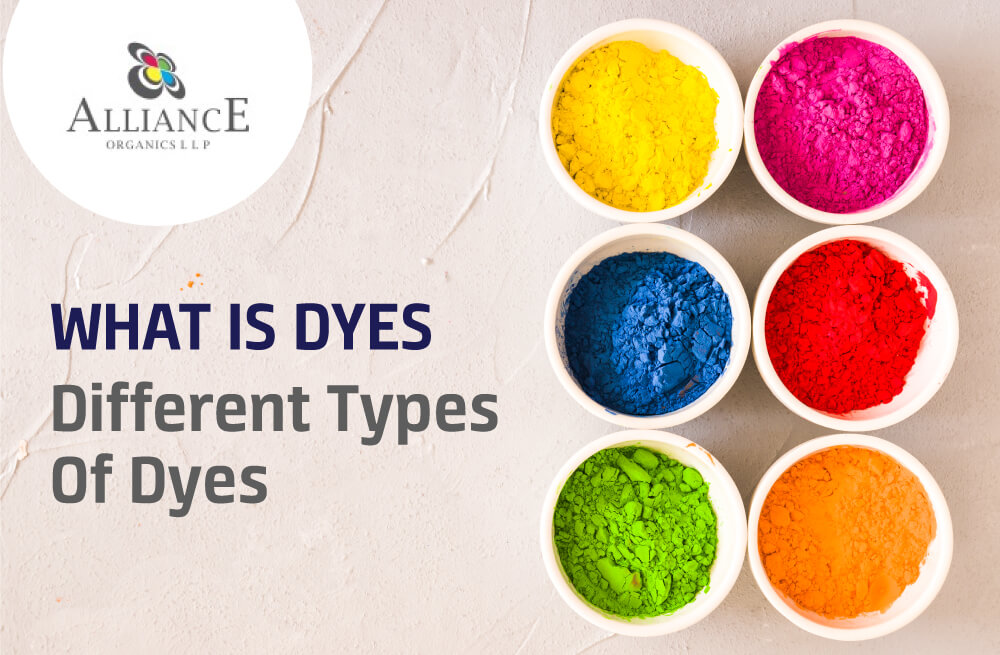
What is Dyes: Different Types Of Dyes

What is Dyes

A dye is used to add colour to different materials. Colours have always been fascinating and a big attraction for humans. Two major types of dyes are natural and synthetic. These are used to impart colour to utensils, textiles, leather-based products, and even food items.

There are separate dyes for colouring different products. Dyes differ from pigments which are finely grounded solids like paint, ink or blended with other products. Dyes are organic compounds, unlike pigments which are inorganic compounds. 

These days, everything is available in multiple colours and textures. And this is possible due to the wide variety of dyes.

Different Types of Dyes are :

Basic Dyes

These dyes are synthetically produced and are insoluble in water. These are also known as cationic dyes. All the shades of these dyes are extremely bright and have a good retention period. Basic dyes are relatively cheap and are used to add colour to acrylic fibres. These have a good affinity for synthetic materials.

Vat Dyes

Vat dyes are made using different plants and are also known as indigo dyes. Vat dyeing is comparatively an expensive process. Vat dyes aren’t directly used to add colour to the substance instead a process called vatting is used when using these dyes.

These dyes are insoluble in water and are made to dissolve in water by the process of vatting. The wet fastness of the dyes is great but rubbing fastness isn’t good. Vat dyes have a very small particle size. These are available in limited shades and colours as compared to other dyes. Vat dyes are usually used by experts as it has a long dyeing process.

Direct Dyes

These are soluble in water and used to dye cellulose materials like cotton materials. Usually, dyeing is done in alkaline conditions when using these types of dyes. But all the materials dyes using this type of dye require after-treatment and care to improve the shade of the dye. Direct Dyes have great fastness properties. These dyes are extensively used in the textile industry.

Acid Dyes

These are often used for colouring the protein fibres like wool, silk, nylon, etc. These dyes are highly soluble in water. These aren’t suitable for cellulosic material. Acid dyes have a good dye fastness property and are effective for colouring leather, and medical products. These are great for the food industry too. These are also used to create inks like printer inks, ball pens, ink for markers, ink pads, etc.

Synthetic Dyes

These are man-made dyes that are produced chemically. Their colours and shades are available in a wide range. These are used in multiple industries as they are comparatively inexpensive and easy to use. It is harmful to both environment and the human body. But still, the use of these dyes is increasing day by day. These chemical compounds are soluble in water. Etp is a must-required process for using these dyes.

Reactive Dyes

Reactive Dyes are best suited for cellulose, protein, and polyamide fibres. These are easy-to-use dyes as they are available in multiple forms. These are soluble in water and have good light-fastness properties.

All the reactive dyes are available in bright colours which makes them good for the textile industry. These Reactive dyes are comparatively cheap and good for bulk use. These have a great electron arrangement and provide protection against UV rays.

Solvent Dyes

These are modern dyes and are being widely used by the upcoming textile mills. Solvent dyes are non-toxic, non-flammable, and non-corrosive dyes. These dyes are convenient to use and take less time to add colour to the fibres and polymers.

These also possess high wettability. One major drawback with these dyes is their solvents are often expensive, so bulk use is difficult. Solvent dyes are available in a wide range and are great substitutes for harmful traditional dyes.

Food Dyes

These are the artificial colours added to the foodstuff to make it attractive. Food dyes are widely used these days. They are available in various forms like pastes, liquid colours, gels, and coloured powders. These food dyes are used to restore the colour of the edible which is lost due to light, heat, and storage.

Food dyes must be used carefully as excessive food colourants can cause various health problems. Food dyes are of two types natural and artificial. Natural food dyes can increase the nutritional value of food and make it attractive. Be careful and conduct proper research before picking the right food dye.

Fertilizer Dyes

Fertilizers or agriculture; dyes are one of the most commonly used dyes. These are used to add colour to fertilizers and alter their chemical composition. One major use of fertilizer dyes is that they help farmers identify the right fertilizers.

Different colours are added to different fertilizers and differentiate the fertilizers based on their chemical composition and quality. Coloured fertilizers add colour to the soil and help identify different crops.

These dyes also improve the quality and health of seeds and help them grow better and faster. Agricultural dyes protect crops from pesticides and fungi by forming a protective layer over the crops.

Seed Coloring Dyes

Seed colouring dye is used to add colour to the seeds which helps the farmers identify and differentiate seeds. Different types of seeds are coloured differently. Seed colouring is a traditional practice that is used to protect the seeds and facilitate plant growth.

Big seed brands have also adopted this method to make their seeds recognizable. Seed colouring is a great way to prevent the seeds from being damaged and differentiate them. Various seed dyes are available these days, try choosing a safe dye as this can impact the growth of the plants and crops.

All the above-listed dyes are some of the different types of dyes used for a variety of purposes. All of them have their pros and cons. One must choose the most suitable dye for them depending on the type of product and use. 

Paper Dyes 

Paper Dyes are especially formulated to color colorful paper products, furnishing vibrant and invariably achromatic. These dyes access paper filaments effectively without compromising strength or texture. They’re primarily water-answerable, allowing easy operation and quick drying. Paper dyes are used extensively in printing, packaging, and ornamental papers, yielding bright, durable colors that repel fading and maintain visual appeal over time. Their eco-friendly variants are gaining popularity due to environmental concerns. 

Acrylic Dyes 

Acrylic dyes are designed to color acrylic filaments, a popular synthetic cloth material. They offer excellent colorfastness for washing, light, and bruising, maintaining bright and pictorial tinges. These colorings chemically bond with the polymer structure of acrylic filaments, ensuring a durable achromatic. Acrylic dyes are generally used in apparel, upholstery, and outdoor fabrics, where resistance to environmental factors is pivotal for life. Innovations continue to improve their sustainability and performance. 

Plastic Dyes 

Plastic dyes are specialized colorings used during the manufacturing of plastic products. These colorings must repel high processing temperatures without demeaning or losing color intensity. They indeed ensure color distribution throughout plastic polymers such as polyethylene, polypropylene, and PVC. Plastic dyes enhance esthetics and can give fresh parcels properties like UV resistance and chemical stability, making plastics both functional and visually appealing. They are essential in producing colored plastics used in automotive and consumer goods. 

Azo Dyes 

Azo dyes are synthetic colorings characterized by one or more azo groups (-N=N-) connecting sweet rings. They represent the largest and most protean class of colorings, available in a wide diapason of vibrant colors. Habituated considerably in fabrics, leather, food coloring, and cosmetics, azo colorings are popular due to their fairly simple conflation and strong achromatic. Some azo dyes bear regulation due to implicit health and environmental enterprises. 

Frequently Asked Questions (FAQs) 

Q. What’s the difference between Dye and Pigment? 

Ans: – Dyes dissolve in detergents; Pigments remain suspended on shells. 

Q. Are natural dyes better than synthetic dyes? 

Ans: – Natural dyes are eco-friendly; synthetic dyes offer brighter, longer-lasting colors. 

Q. What are the main uses of Dyes? 

Ans: – Used in fabrics, plastics, inks, cosmetics, and food coloring. 

Q. How do dyes bond to fibers? 

Ans: – They form chemical or ionic bonds with fiber molecules.

Q. Why do some dyes fade or wash out? 

Ans: – Due to poor fixation, exposure to the sun, or harsh washing.