
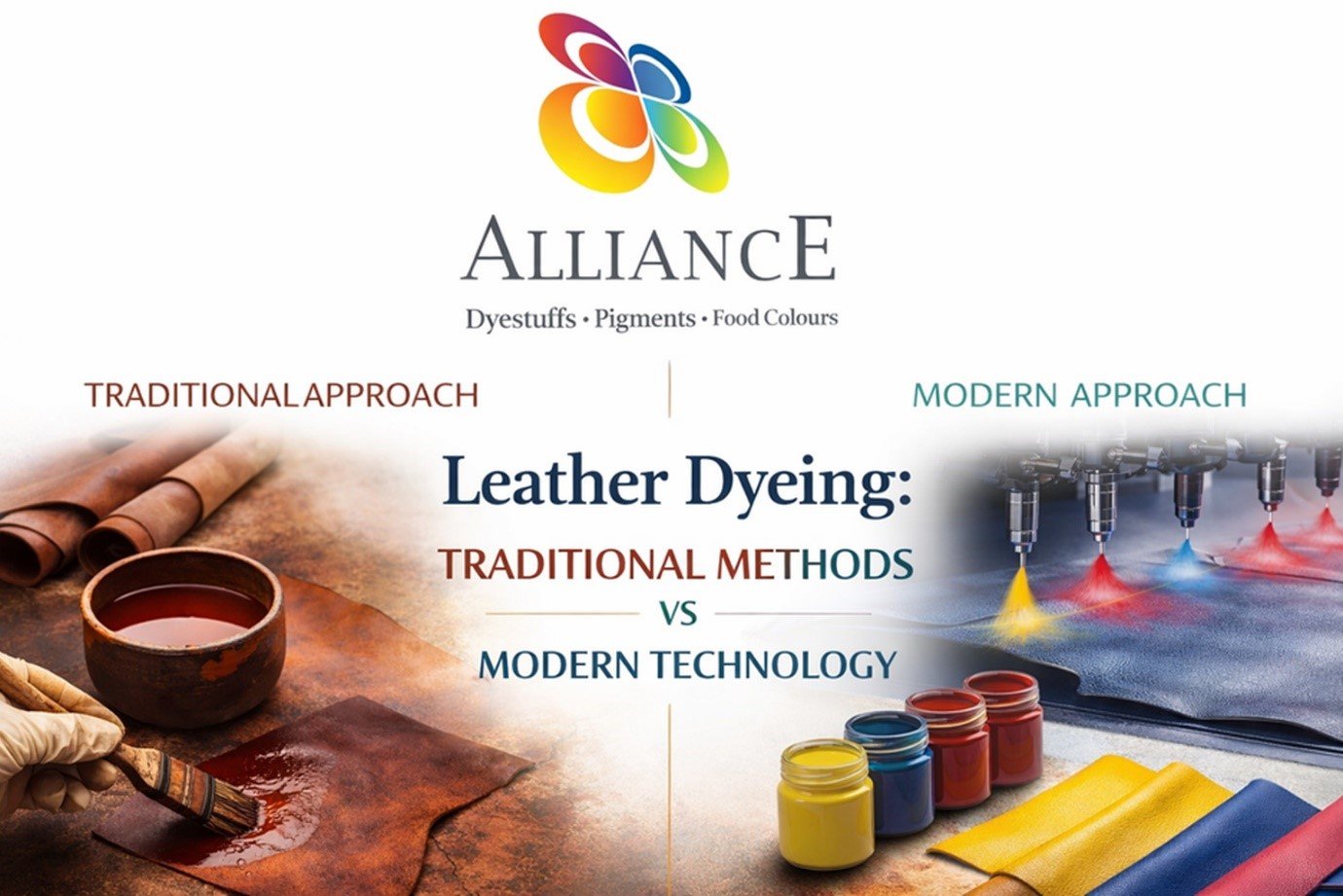
Introduction: The Art and Science of Leather Coloring
Leather has long been prized for its beauty, durability, and versatility. Whether in footwear, luxury handbags, furniture, or automotive upholstery, leather goods often get their final touch of character and style through dyeing. While the process might seem simple, just adding color, the reality is far more intricate.
Dyes for leather must meet aesthetic expectations as well as evolving environmental regulations and performance standards. As a result, the leather industry is shifting from traditional dyeing techniques to advanced, eco-conscious technologies.
Let’s break down how these two approaches compare and what the future holds for leather dyeing.
Traditional Leather Dyeing: A Craft Rooted in History
Leather dyeing is one of the oldest colouring processes, with roots tracing back to ancient civilisations. Traditional methods were manual and relied on natural dyes.
Common Traditional Methods:
• Drum Dyeing: Leather hides are tumbled with dyes in rotating drums for even penetration.
• Hand Dyeing: Artisans use brushes, sponges, or daubers to manually apply dye—ideal for detailed or customized work.
• Vat Dyeing: Leather is submerged in dye baths for slow absorption over hours or days.
Natural Dyes for leather are Traditionally Used:
- Indigo for blues
- Logwood for purples
- Henna and saffron for yellows
- Madder root for reds
These processes produce rich, warm tones and are still favoured in artisan leather goods, but they have drawbacks:
- Inconsistent color batches
- Longer processing times
- Limited resistance to wear and light
- Use of large volumes of water and chemicals for fixing color
Modern Leather Dyeing: Efficiency Meets Sustainability
As the leather industry industrialised, the need for scale, precision, and efficiency led to synthetic dyes and automated processes.
- Key Innovations in Modern Dyeing:
- High-performance aniline and metal-complex dyes for vibrant, deep penetration
- Solvent-based dyes for leather helps fast-drying applications
- Eco-friendly water-based dyes reducing VOCs (volatile organic compounds)
- Computer-aided color matching for batch consistency
- Rapid drum dyeing with controlled heat and rotation cycles
These innovations allow leather manufacturers to produce uniform shades, optimise yield, and meet regulatory compliance, especially for global exports.
Sustainability in Focus: Green Chemistry and Cleaner Alternatives
Modern dyeing isn’t just about better colors; it is about cleaner processes. Environmental concerns are reshaping how leather dyes are formulated and applied.
What’s Driving Change?
REACH & EPA regulations limiting harmful chemicals
- Customer demand for eco-conscious products
- Fashion brands committing to net-zero emissions
Eco-Friendly Advances Include:
- Water-based dyes with low toxicity
- Chrome-free leather dyeing
- Enzyme-assisted dyeing for lower energy use
- Closed-loop dye systems that recycle water and chemicals
These innovations help major tanneries reduce chemical runoff, carbon emissions, and water usage.
Performance Comparison: Traditional vs Modern
- Feature Traditional Methods Modern Technology
- Color Range: Earthy, limited Extensive, customizable
- Consistency Variable Highly consistent
- Environmental Impact High Reduced with eco dyes
- Durability Moderate High (light, rub, water fastness)
- Application Speed: Slow, Fast, automated
- Cost Efficiency Lower scale, higher cost Optimised for more batches
At Alliance Organics, we know the balance between tradition & innovation. That is why our range of dyes for leather is crafted to give:
- Superior penetration and color strength
- Compliance with REACH, RoHS, and other international norms
- Water-based and low-VOC dye options
- Tailored solutions for footwear, belts, upholstery, bags, and more
Our dyes are trusted by manufacturers across India, Europe, and Southeast Asia. They help meet the evolving expectations of both customers and regulators.
FAQs: People Also Ask
Are synthetic leather dyes safe?
Yes—especially modern formulations that comply with global chemical safety standards and avoid heavy metals.
Can eco-friendly dyes match the performance of traditional dyes?
Absolutely. Many water-based dyes today match or even exceed the lightfastness, rub resistance, and color depth of older solvent-based options.
Why is leather dyeing important for product quality?
Proper dyeing ensures that leather maintains color uniformity, durability, and aesthetic value—which directly affects product appeal and price.
Conclusion: Innovation Without Losing Craft
Leather dyeing is both an art and a science. While traditional techniques reflect rich craftsmanship, modern technologies are redefining what is possible with improved performance, sustainability, and efficiency. As consumer expectations continue to evolve, manufacturers must choose dye solutions that balance heritage with modern innovation.
By partnering with trusted suppliers like Alliance Organics, brands can access high-performance, eco-smart dye solutions designed for today’s leather industry. Alliance Organics focuses on delivering quality, consistency, and sustainable dye technologies that help manufacturers create beautiful, durable, and responsible leather products. If you’re looking to enhance the quality and appeal of your leather goods, explore the advanced dye solutions from Alliance Organics and take a step toward smarter, more sustainable leather production.