
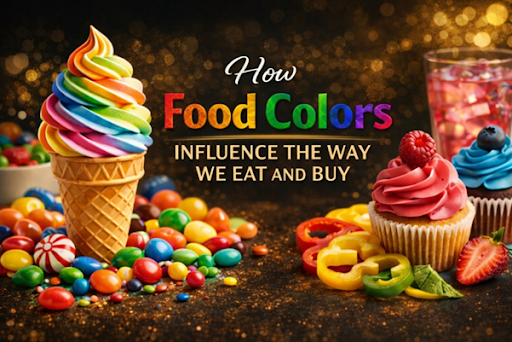
We often judge food by its appearance before tasting it or reading the label. That first look is more important than many people think. Food Colors strongly change our eating habits. Affecting everything from how we think food will taste to how much we trust a brand. In today’s food market, color is more than decoration; it’s a way to communicate.
Let’s look at how Food Colors affect what people buy and why they are so important in today’s food industry.
The Psychology Behind Food Colors
Color is closely linked to our emotions and memories. When it comes to food, these feelings shape what we expect before we even taste anything. Food Colors signal freshness, flavor, and quality, quickly guiding people to choose or avoid a product.
For example:
* Red and orange hues are known to stimulate appetite
* Yellow is often associated with energy and positivity
* Green suggests health, freshness, and natural ingredients
* Brown conveys richness and comfort
These automatic connections help explain why color often decides what we pick off the shelf.
How Food Colors Affect Taste Perception
One thing about Food Colors is how they can change the way food tastes to us. Studies show that people often judge the strength of a flavour just by looking at its colour. the colored drink might taste sweeter, while a colour can make us think
It has less flavour. In the same way, bold snack colors can make us think they are crunchier or have more seasoning.
When brands match Food Colors to the flavors people expect, they can make the eating experience better without changing the recipe.
Visual Appeal and Shelf Impact
In stores, the products have just a few seconds to catch someone’s eye. Food Colors are key for grabbing attention, especially in busy sections like drinks, candy, snacks, and sauces.old, consistent colors help:
* Capture shopper attention
* Strengthen brand recognition
* Differentiate products from competitors
That’s why many brands work hard to keep their colors the same in every batch. It helps people see the product as high-quality and reliable.
Influencing Freshness and Quality Perception
People often think bright, even color means food is fresh. Processing, storage, and heat can change how food looks, so Food Colours are important for maintaining product appearance.
Food Colors are commonly used to:
* Restore natural tones lost during processing
* Ensure uniform appearance across production runs
* Enhance the overall look of packaged foods
When food looks good and stays the same each time, people trust it more and are more likely to buy it again.
Food Colors and Impulse Buying
People often buy things on impulse because they look good. Bright and fun Food Colors work well for products meant for quick choices, like candy, drinks, and snacks. Ited-edition and seasonal products often use distinctive colors to:
* Create excitement and novelty
* Encourage trial purchases
* Stand out during promotional campaigns
Colour: Trying new colours can quickly boost sales for a short time.
Natural vs. Synthetic Food Colors
As people become more aware, many are checking ingredient labels more closely. This has led to more demand for natural Food Colors, especially in products that are organic, health-focused, or have simple labels.
However, synthetic Food Colors continue to be widely used due to their:
* Superior color stability
* Consistent performance
* Cost-effective brands have to balance what customers want, what the rules require, and how well the colors work when choosing Food Colors for their products.
Cultural and Regional Influences on Food Colors
People in different places and cultures like different food colors. What looks good in one country might not in another. For example, bright colors are popular in party foods, while softer colors are often chosen for premium or gourmet items. Knowing these differences helps brands adjust their products for different markets while still making them attractive.
Why Food Colors Matter More Than Ever
In a competitive, image-focused food world, food colours influence what we eat and buy more than ever. They create first impressions, shape taste expectations, and help build a brand’s identity. Colours enhance consumer trust, encourage trial, and drive repeat purchases, making food products look as appealing as they taste.
Trusted manufacturers like Alliance Organics support this by providing high-quality, consistent food colour solutions. In the end, flavour matters—but it’s the colour that makes us want to try the food first.