
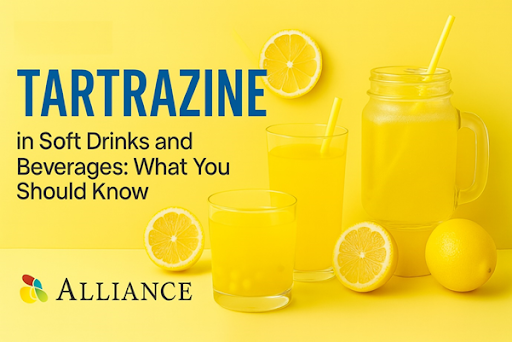
Tartrazine is a common synthetic food colorant that gives most lemon-lime or bright orange soft drinks their bright color.
What is Tartrazine? Why do people put it in drinks? Is it safe?
This article talks about the facts, pros and cons, and reasons why Tartrazine is still so common in drinks.
What is Tartrazine?
FD&C Yellow No. 5, also known as tartrazine, is a man-made lemon-yellow dye that is often used to color food. It dissolves in water, stays stable, and makes a bright yellow color. You can use it by itself or mix it with other dyes to make drinks that are orange or green.
Some common uses for drinks are:
• Sodas with a lemon flavor
• Energy drinks with orange and citrus flavors
• Soft drinks that taste like fruit
• Water with flavor
• Juice mixes
• Sports and electrolyte drinks
Why do soft drinks have Tartrazine in them?
Color has a big effect on how we taste things. Even if the taste is right, a citrus drink that isn’t bright yellow might not seem refreshing or zesty. Tartrazine is a popular choice among beverage makers because it gives drinks a bright, consistent color that doesn’t fade easily over time or when exposed to light.
2. Affordable
Compared to natural colorants, Tartrazine is cheaper and works better because it takes less of it to get a strong color.
3. Liquid Formats That Are Stable
Tartrazine doesn’t change chemically and keeps its color over a wide range of pH levels, which makes it great for acidic and carbonated drinks.
Is Tartrazine Safe? Getting a Global Point of View
Safety checks and rules have been put in place for tartrazine. Most food safety agencies around the world say it’s okay to use within certain limits. The US FDA (for foods, drugs, and cosmetics), the EFSA (for the EU ADI: 7.5 mg/kg body weight), the FSSAI (for India, with certain limits), and the Codex Alimentarius (for international standards) have all approved it.
Health Concerns: What the Debate is About
Tartrazine is generally safe, but it has caused some problems because it can cause allergy-like reactions.
Some people, especially those who are sensitive to aspirin or have asthma, may get hives, rashes, headaches, or breathing problems.
These reactions don’t happen very often, but regulators know about them, so several countries, including the EU, require labels.
2. Is your child hyperactive?
Some studies have indicated a potential correlation between synthetic dyes, like Tartrazine, and heightened hyperactivity in children. The evidence is mixed, but there is enough for EU rules to say that products with it must have warning labels.
For people who are sensitive:
If you have allergies or are sensitive to dyes, read the labels on products and talk to your doctor. A lot of brands now have options that don’t have Tartrazine.
Natural Substitutes for Tartrazine
As more and more people want “clean label” products, beverage companies are looking into natural alternatives, like:
• Curcumin (turmeric)
• Annatto or saffron
• Beta-carotene
• Extract of paprika
But these other options can have trade-offs in terms of stability, cost, and color intensity, which is why synthetic dyes like Tartrazine are still the most common in drinks that are high in volume and shelf-stable.
What Beverage Companies Are Up to Right Now
Big beverage companies, including those in India, work with color suppliers like Alliance Organics to make sure that Tartrazine is used safely and legally, that some markets get different formulations, and that labels are clear.
Some businesses even have two product lines: one with synthetic colors that are cheaper and one with natural dyes that are better for your health.
People Also Ask: FAQs
1. Is it safe to drink Tartrazine?
Yes. Most people can safely use Tartrazine as long as they stay within the recommended limits.
2. What is the purpose of adding Tartrazine to soft drinks?
It makes drinks look more appealing by giving them a bright yellow or orange color.
3. Does Tartrazine make you hyper?
Some studies indicate a potential association in children; however, the evidence remains inconclusive. In the EU, products that contain Tartrazine must have a warning label.
4. Are there soft drinks that don’t have Tartrazine in them?
Yes. Many brands now clearly label their products to meet consumer preferences by offering items with natural colors or no added dyes.
Conclusion: The Color That Makes the Flavor
Tartrazine is widely used because it delivers bright colour, works well in beverages, and is cost-effective. When used within approved limits, it is considered safe by experts. However, some individuals may be sensitive to it, which makes reading labels and staying informed important.
Overall, tartrazine remains a reliable colouring choice for most people. At the same time, consumer preferences are shifting toward cleaner and more transparent ingredients. Brands like Alliance Organics support this transition by focusing on quality, safety, and trust, helping businesses balance performance, cost, and consumer confidence as the beverage industry evolves.