
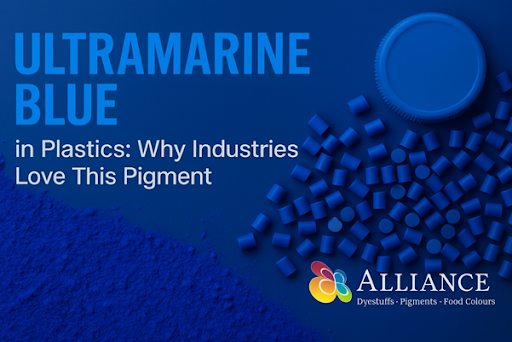
Ultramarine Blue was made from lapis lazuli in the past, and Renaissance artists loved it for its bright color. Today, synthetic methods produce the same classic blue, but they are more consistent and cost less. Ultramarine Blue is known in the plastics industry for its strength, stability, safety, and flexibility. Depending on the concentration and formulation, it gives plastics a clear blue color that can be anything from sky blue to royal blue. Why Plastic Makers Use Ultramarine Blue as Their Main Pigment
1. Very good heat stability
It is very hard to make plastic when the temperature is high. Pigments need to be able to handle these conditions without breaking down or losing their color. Ultramarine Blue is very thermally stable, which means that it keeps its color during processes like extrusion, injection molding, and blow molding.This pigment works well with many types of materials, such as PVC, polystyrene, ABS, polyolefins, and other polymers.
Great lightfastness. Many plastic products need to keep their color in the sun. Ultramarine Blue is very resistant to fading from UV light, so it keeps its bright color in things like outdoor furniture, packaging, and car interiors
Non-Toxic and Good for the Environment. Safety is increasingly important when selecting materials. Ultramarine Blue is safe for the environment and doesn’t harm people, so it can be used in toys and food packaging.
It contains no heavy metals, volatile organic compounds (VOCs), or hazardous residues, which benefits both manufacturers and end users. These eco-friendly features enable businesses to meet REACH and RoHS requirements.
No bleeding or moving
Ultramarine Blue does not move or bleed as some organic pigments do. The color stays even, and there are no stains, which is great for things that need to be exact, like white goods or clear packaging.
More Attractive Aesthetically
Ultramarine Blue gives a deep, bright blue color without any green. It also whitens by hiding yellow undertones in plastics, which makes white or light-colored products look cleaner and brighter.
How Ultramarine Blue is used in the plastics business
Ultramarine Blue is very useful in many different ways. It is used in:
• Things that people buy: toys, containers, home appliances, and other household items.• Packaging: films, caps, and bottles.
• Building materials include PVC pipes, cables, profiles, and fittings.
• Parts for cars: interiors, dashboards, and trims.
• Fibers and textiles: synthetic fibers in carpets and fabrics.
Ultramarine Blue works well in both high-end and mass-market plastic goods.
The Technical Edge: What Ultramarine Blue Can Do
Ultramarine Blue has some technical benefits. It spreads easily in most plastics, making the color even.
Its low refractive index helps keep the plastic’s finish smooth and the surfaces clear.
It can be used with a wide range of additives and processing methods because it doesn’t react with acids or bases. Ultramarine Blue is a popular pigment for making masterbatch because it is so reliable.
A Choice That Will Last for a Better Future
Businesses today are looking for materials that are safer and better for the environment, and Ultramarine Blue perfectly supports this goal. It is environmentally safe, non-toxic, and a better alternative to many synthetic organic pigments. By delivering strong performance with minimal environmental impact, it helps companies balance aesthetics, functionality, and responsibility.
Beyond coloring plastics, Ultramarine Blue enhances reliability, safety, and versatility, offering vibrant, long-lasting results that align with modern sustainability standards. Its effectiveness in packaging, automotive components, and consumer goods proves that classic solutions still play a powerful role in today’s world.
For high-quality and eco-friendly Ultramarine Blue solutions, choose Alliance Organics and move towards smarter, safer, and more sustainable manufacturing.